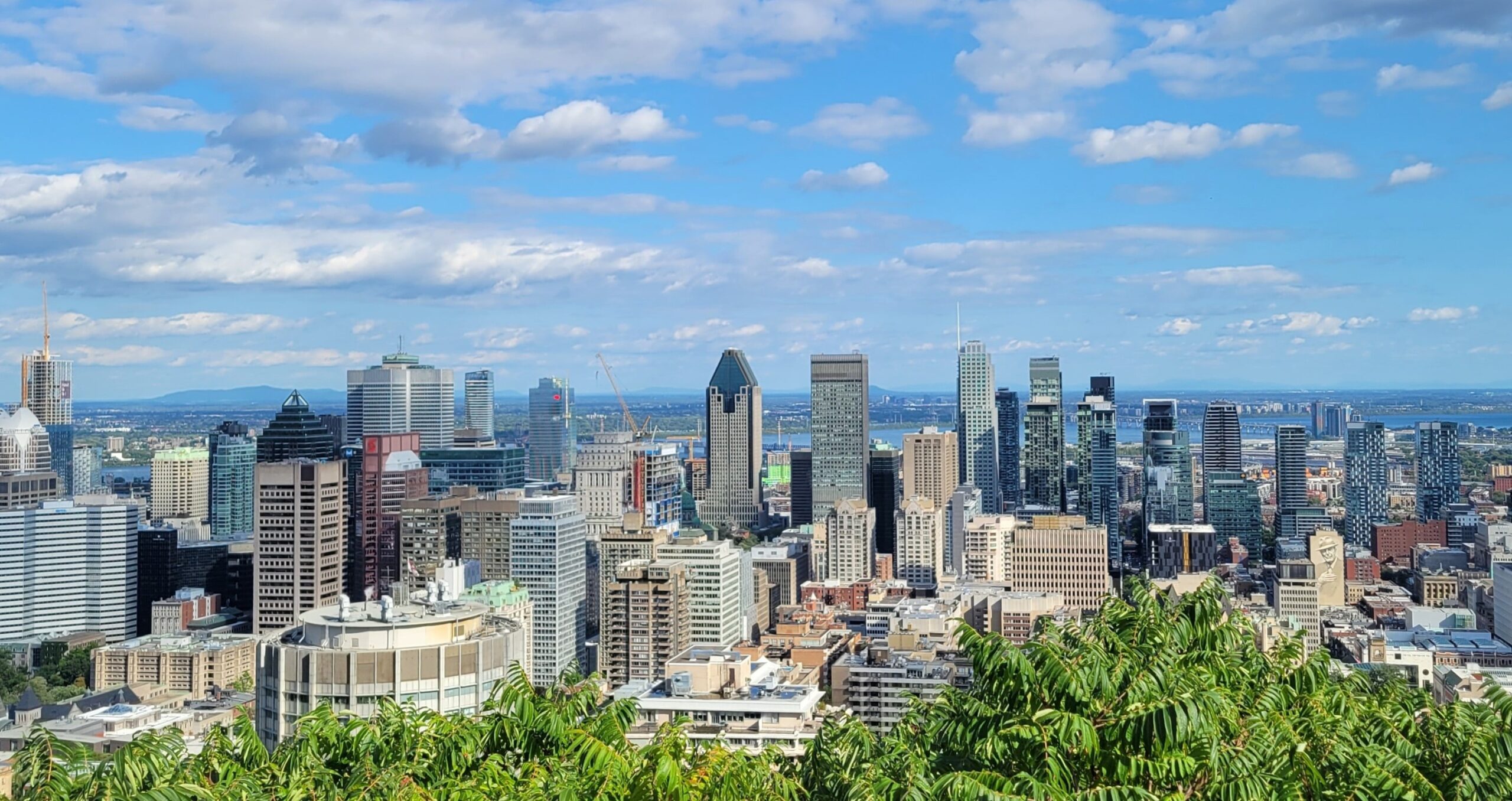
Montreal can confuse you in the best possible way. You land in Canada, yet the streets look French, the signs read in French, and whole neighborhoods feel closer to Paris or Rome than to most cities in the US or Canada.
That contrast is what makes Montreal so memorable. It is one of the world’s largest French-speaking cities, but it sits on an island in North America, surrounded by English-speaking regions. Over a few days, the city reveals itself through Mount Royal views, hot sesame bagels, long coffee lines, elegant churches, old stone streets, and a weekend rhythm that shifts fast with weather, hockey, and festival crowds.
If you want to understand why people call Montreal North America’s most European city, start with the streets and let the city explain itself.
Why Montreal feels so different from other North American cities
French shapes the city at street level
Montreal’s identity starts with language. Street signs, parking notices, menus, and storefronts lean heavily French because Quebec’s only official language is French. Even global chains change their face here. KFC becomes PFK, short for “Poulet Frit Kentucky.”
That public language changes the mood of the city. The metro feels different, too. Announcements are in French, signs lean French, and a visitor notices it right away. Montreal is bilingual in daily life, but its public face is clearly tied to Quebec.
The pace is calmer than New York or Toronto
Montreal is only about a 6.5-hour drive from New York City, yet the mood is far less rushed. People sit outside for coffee, take long walks, and turn a sunny afternoon into an event. Even in busy areas, the city often feels slower than other big North American metros.
That slower pace also comes from how usable the city is on foot and by transit. A single metro ride costs 3.75 Canadian dollars, and a weekend unlimited pass costs 16. The stations feel closer in spirit to Europe than to New York, and the city is easier to enjoy without a car than much of North America.
The Europe comparison comes from the ground, not the guidebook
Montreal doesn’t feel European because someone wrote it in a brochure. It feels that way because of terrace seating, church-front squares, stone facades, and cobblestone streets that keep appearing when you turn a corner.
For a tighter route that covers several of the city’s classic stops, this one-day Montreal guide overlaps well with the places that define the city best.
Start at Mount Royal before you do anything else
The hill gave Montreal its name
Mount Royal is more than a viewpoint. It is the hill that gave Montreal its name, and that makes it the best first stop. You begin high above the city, looking at the skyline, the neighborhoods, and the river-shaped layout that explains why Montreal feels both urban and open.
The park itself matters, too. It feels raw and wooded rather than polished. Frederick Law Olmsted, the same landscape designer linked to New York’s Central Park, helped shape it, yet the paths still feel close to a forest walk.
The skyline makes sense from up here
Early in the morning, Mount Royal is calm. Joggers pass through, the trees block and reveal the skyline in pieces, and the city slowly wakes up below. That contrast is part of Montreal’s appeal, glass towers behind thick green cover.
Local height rules help preserve this view. Buildings are kept lower than the mountain, so the skyline never crushes the hill. From up here, you also grasp a key Montreal fact, the city is an island. Once you see that, the neighborhoods below stop feeling random and start to fit together.
Eat the foods Montreal is proud of
Saint-Viateur bagels are worth the wait
Montreal’s best food moments start simply. At Saint-Viateur Bagel, open since 1957, the line moves toward a counter that smells like fresh dough and toasted sesame. A warm bagel with plain cream cheese is enough to understand the hype.
Montreal bagels feel different from the thick New York style many US travelers know. They are smaller, a bit sweeter, and easier to eat in one sitting. The city’s bagel culture came with Jewish immigrants from Eastern Europe, and that history still lives in these bakeries.
Cafe Olimpico shows Montreal’s coffee culture
A few blocks later, the mood shifts from bakery line to espresso line. Cafe Olimpico is one of those places where the queue says as much as the menu. People grab coffee, drift outside, and stay longer than they planned.
That street life matters. Montreal’s cafe culture feels social in a European way, especially in good weather. Outdoor tables aren’t a side feature here. They are part of how the city works.
Poutine is famous, even if it isn’t subtle
You can’t come to Quebec and skip poutine. At its most basic, it is fries, cheese curds, and gravy. It is heavy, salty, and honest. If you want the region’s classic comfort food, this is the dish.
It is also fair to say the hype can outgrow the bite. Poutine is worth trying once, but it isn’t delicate or surprising. It tastes like what it looks like. Montreal also has another local favorite, smoked meat sandwiches, which show up often around the old quarter and the port.
If you’re building a longer food and neighborhood list, this Montreal travel guide and map adds a few more stops beyond the usual shortlist.
Markets and neighborhoods show the city at its best
Jean-Talon Market feels crisp and local
Jean-Talon Market is one of the places where Montreal stops feeling like a postcard and starts feeling lived in. Produce, flowers, cheese, honey, seafood, and prepared food all sit in a space that feels bright, clean, and well run.
What stands out most is how tidy it feels, even around the fish counters. Labels often appear in French, and measurements return to kilos rather than pounds, which reminds American visitors that Quebec moves to its own rhythm.
Little Italy and the Plateau change the mood in a few blocks
A short walk can take you from French Montreal to something that feels almost Italian. Little Italy has gelato shops, espresso bars, terrace seating, and flags that leave no doubt where the neighborhood draws its flavor from.
Nearby streets around the Plateau feel even better for lingering. Older homes, balconies, bikes, and leafy blocks give this part of the city warmth that downtown often lacks. For many visitors, it would be a more memorable place to stay than the business-heavy core.
Old Montreal delivers the strongest European feel
Notre-Dame Basilica anchors the old quarter
Old Montreal is where the city’s European image becomes impossible to dismiss. The plaza outside Notre-Dame Basilica has the classic shape of an old European square, open space, a grand church facade, people gathering, and street performers pulling a crowd.
Inside, the basilica is stunning enough to justify the 18 Canadian dollar entry. Even before you step in, the area around it already feels removed from the rest of North America. Statues, stone buildings, and narrow old streets do most of the work.
Old Port brings the crowds, terraces, and weekend energy
From the basilica, the old quarter spills toward the Old Port. On a sunny long weekend, the whole area fills up fast. Bars and restaurants spread onto the street, gelato shops stay busy, and American visitors mix with locals under Formula 1 flags and early summer light.
The Old Port adds another layer, ferris wheel, zip line, water views, and heavy foot traffic. Marché Bonsecours looks grand from outside, though inside it feels closer to a boutique hall than a working market. Walk a little farther and modern Montreal returns, with Chinatown and taller buildings waiting nearby.
Downtown matters less than the old streets
Downtown Montreal has tall buildings, major events, sports crowds, and plenty of life on the right weekend. Still, it is Old Montreal that people tend to remember. The old quarter is compact, but it gives the city its clearest identity.
Old Montreal is small, but it delivers more character in a few streets than many larger downtowns manage in a whole district.
That is why the area can exceed expectations so quickly. You do not need miles of old streets when the mood is this strong.
The French identity here comes from history
Quebec kept its language after British rule
Montreal looks French because its roots are French. In the 16th and 17th centuries, French settlers built communities across what they called New France, especially around Quebec City and Montreal. They brought their language, religion, and customs with them.
Britain took control in 1763 after the Seven Years’ War. Yet French identity did not disappear. British authorities allowed much of the local language, religion, and civil life to remain because the French-speaking population in Quebec was too large to ignore. That decision shaped the province for centuries.
Montreal is bilingual, but not in the way many visitors expect
Canada recognizes both English and French at the national level, but Quebec protects French more firmly than the rest of the country. Montreal is the province’s most bilingual city, so many people switch between both languages with ease.
Go farther into Quebec, though, and the balance changes. Quebec City is more French-first, and smaller towns can feel almost fully French. There is also a strong Quebecois identity that is not the same as modern France. Some residents still prefer the idea of Quebec as a separate nation, and past referendums came surprisingly close.
A sunny weekend reveals the real Montreal
Weather, sports, and Formula 1 change the city fast
Montreal can feel empty at the wrong moment. Rainy weekdays and hockey nights can leave downtown streets looking quiet, even in Canada’s second-largest city after Toronto. Then the weather turns, a long weekend begins, and the place fills up almost overnight.
That swing affects prices, too. Around a sunny long weekend, with Formula 1 close by, rooms can vanish across the city. Shared hostel beds that felt expensive on a weekday became shockingly costly by Friday and Saturday, especially once parking was added. Book late, and Montreal can punish your wallet.
Freedom and friction live on the same streets
Montreal also feels more expressive than many cities in North America. Personal style is wide open here, and downtown makes that plain. Pride flags, bold outfits, and a strong sense of self-expression give the city a looser, less guarded mood.
There is a harder side as well. Homelessness is visible in parts of downtown, and street tension can surface without much warning. Still, the broader feeling is that Montreal is safer than many North American cities, especially once you move beyond a few rougher blocks.
Final thoughts
Montreal earns its reputation because the city keeps proving the point. The French language is not decoration. The cafe culture is not staged. The old streets, church squares, bagel shops, metro signs, and neighborhood markets all push in the same direction.
What stays with you most is the contrast. Downtown can feel plain, even quiet, while Old Montreal feels packed with history and energy. Mount Royal gives the city shape, Jean-Talon gives it texture, and Quebec’s French identity gives it a voice that no other major North American city quite matches.
Montreal deserves more than a quick stop between Toronto and New York. Spend a few days there, catch it in good weather, and you may leave wondering the same thing many travelers do, whether the closest thing to Europe in North America was in Quebec all along.