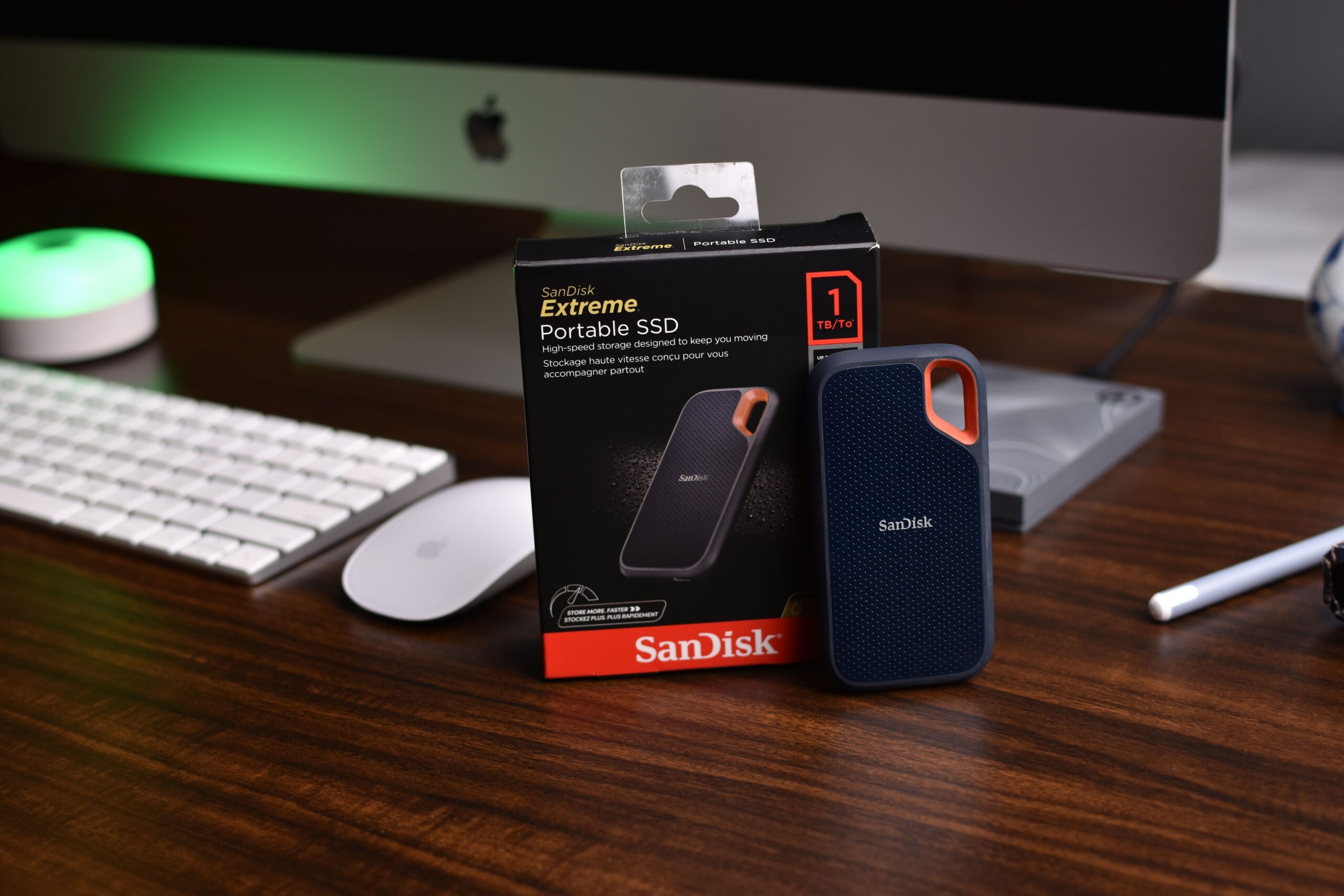
Your next SSD may cost more because an AI server wanted it first.
PC parts are still available in June 2026, but storage is getting tighter and less predictable. The same forces that sent RAM prices through the roof are now pulling NAND flash away from consumer drives and into AI systems, enterprise servers, and phone supply chains.
If you’re building a PC this summer, the problem isn’t empty shelves everywhere. It’s that prices, discounts, and model availability are all starting to drift in the wrong direction.
AI demand is pulling SSDs off the consumer market
The current SSD squeeze is part of a larger memory crunch. Chip makers can make more money by feeding AI infrastructure than by keeping retail storage cheap, so capacity is moving where margins are highest.
On the RAM side, manufacturers have already shifted more output toward HBM, the stacked memory used in AI accelerators. Storage is following a similar path. NAND makers are putting more focus on enterprise products, and on newer AI-oriented formats such as high-bandwidth flash, or HBF, which are built for massive workloads rather than home PCs.
Data centers are eating NAND supply
This trend stops sounding abstract once you look at the hardware. At Computex, Wiwynn showed Nvidia’s SCADA storage server demo, a system that can hold 96 liquid-cooled SSDs for up to 2.9 petabytes of storage in a single unit.
That kind of demand changes the math fast. It doesn’t take many orders like that to absorb a huge amount of NAND that might otherwise end up in consumer NVMe drives.
The effect is already visible. A Silicon Motion executive told Tom’s Hardware that the retail SSD market has almost disappeared, with PC makers leaning on third-party drives because direct NAND supply is drying up. Retail listings can still look normal at a glance, but the stock behind them is getting less dependable.
This is tied to the same crunch hitting RAM and phones
Storage is not getting squeezed alone. IDC’s memory shortage analysis points to rising DRAM and NAND costs across both PCs and phones, which matches what builders are already feeling.
RAM has been the loudest warning sign. Reports out of Germany put DDR5 pricing hundreds of percent above 2025 levels, and Lexar’s regional sales warning suggested more increases could land before the end of 2026. Even Chinese suppliers like CXMT are selling at market rates, not flooding the channel with cheap memory.
Phones are next in line. Carl Pei of Nothing said RAM can account for more than half the cost of a new phone. That pressure could spill into future devices with Apple PCIe 5 SSD upgrades and larger memory tiers, because even giant brands don’t get a free pass on chip costs.
What the shortage looks like for PC builders
This isn’t a replay of the worst panic-buying years. You can still buy SSDs right now, and most planned builds are still possible. The trouble is that the market feels fine until a sale vanishes, a common model goes out of stock, or a drive jumps in price between one paycheck and the next.
You can still buy SSDs in 2026. What you can’t count on is stable pricing, deep discounts, or easy restocks.
A few signs keep showing up across the market:
| What you see | What it usually means |
|---|---|
| Popular capacities disappear first | Restocks are shallow or delayed |
| Sale prices vanish quickly | Replacement cost is rising |
| Small brand drives get close to big-brand pricing | Everyone is paying more for NAND |
| OEM system prices creep up | Storage costs are flowing into full builds |
The takeaway is simple. Availability can look healthy while value gets worse.
Retail shelves still have drives, but the easy deals are fading
Mainstream NVMe drives usually feel this kind of pressure first because that’s where most buyers shop. The first thing to disappear is often not the drive itself, but the discount that made it worth buying.
That matters because many builders plan around a deal on a 1 TB or 2 TB drive. When those deals dry up, the whole parts list shifts. A GPU upgrade may have to wait. A nicer case may drop off the list. A first build starts to feel more cramped before it even powers on.
While you compare listings, keep misleading memory specs in modern hardware in mind. Higher prices give brands more room to lean on vague labels, fuzzy “up to” claims, and confusing memory language that looks better on a product page than it does in real use.
New builders have the least room to wait
Experienced upgraders can delay a second drive or reuse older hardware for a while. New builders usually can’t. A modern PC needs solid-state storage, so if SSD prices rise after you’ve already bought the CPU, motherboard, and GPU, the budget gets bent out of shape.
That’s why first-time builders feel this shortage hardest. They either spend more than planned, settle for a smaller drive, or pause the build and hope the market cools off.
If you need storage in the next few months, buying sooner makes more sense than waiting for a sudden wave of cheap drives. That doesn’t mean panic-buying a massive flagship SSD. It means picking a reliable model, a sensible capacity, and a price you can live with before the next jump hits.
Why manufacturers keep picking enterprise over retail
The logic behind this shift is not hard to see. One big AI customer can buy servers, accelerators, networking gear, and storage in a single order that dwarfs thousands of consumer sales.
Retail SSDs are a slower business. They move through distributors, storefronts, rebates, returns, and warranty claims. Enterprise contracts are cleaner, larger, and more profitable, so when capacity gets tight, consumer storage ends up in the weaker seat.
Bigger orders and bigger margins are winning
That profit gap helps explain why consumer launches feel slower across the board. Companies are chasing AI demand because it pays more right now.
HBF may widen that gap even further. It is a form of storage tuned for AI workloads with huge memory needs, not something meant for a gaming rig or office desktop. Home users won’t plug it in and call it an upgrade. Still, if factory time, engineering effort, and NAND output drift toward that class of product, ordinary SSDs stay under pressure.
The short version is ugly but clear. Consumers are no longer the center of the memory business.
Some markets may protect consumer supply better
China offers a different angle. Reports around YMTC and CXMT suggest that state support can come with pressure to keep making consumer memory and storage alongside enterprise products. That does not make those parts cheap, and it does not fix global supply, but it can keep consumer output from shrinking every time AI margins spike.
Elsewhere, manufacturers have more freedom to chase the best return first. That’s great for quarterly revenue. It’s much worse for anyone trying to build or upgrade a PC on a normal budget.
Other hardware rumors show the same pattern
This week’s GPU and CPU chatter carried the same mood as the SSD story. Server hardware keeps getting concrete roadmaps, while consumer parts show up as leaks, whispers, and “maybe next year” refreshes.
Nvidia’s RTX 50 Super cards may still arrive
Rumors around Nvidia’s RTX 50 Super refresh are back after many people assumed the lineup had been scrapped. A report on the RTX 50 Super rumor says the cards could still land in late 2026 or early 2027, with 3 GB GDDR7 modules playing a big role.
If the leak is right, the refresh may fix some of the more annoying memory limits. The claimed lineup includes a 12 GB RTX 5060 Super, an 18 GB RTX 5070 Super, and 24 GB versions of the 5070 Ti and 5080 Super.
The bigger story is timing. Consumer launches keep stretching out while AI demand eats up supply and attention. That makes every rumored refresh feel less like a bonus and more like a delayed correction.
AMD’s Zen 6 rumor swaps the iGPU for an NPU
Another rumor says AMD’s Zen 6 desktop chips, code-named Olympic Ridge, may drop the small integrated GPU in favor of an NPU and support for CUDIMMs, a memory format built for higher clock speeds.
That would give AMD another AI bullet point. It would also trade away something useful. The tiny iGPU in recent Ryzen desktop parts is not there for gaming, but it is excellent for video output and troubleshooting when a discrete GPU is missing or acting up.
The same rumor also points to no native DDR4 support, which sounds believable by early 2027. The harder part to accept is losing a practical feature so a desktop CPU can wear more AI branding.
Server platforms keep moving faster than desktop parts
AMD has already teased SP7 and SP8 for next-generation EPYC Venice and Verano chips. Venice is expected to scale up to 256 Zen 6C cores per socket, with 12,800 MT/s memory, 16 memory channels, and 128 PCIe 6.0 lanes.
Intel also showed its huge LGA 9324 socket for Xeon Diamond Rapids, which it says will use the domestic 18A-P process. Those parts are impressive. They also make the current market feel uneven, because enterprise roadmaps keep moving with confidence while consumer buyers wait for clearer answers.
One bright spot, and one odd headline
Not every story this week was bleak. One project offered a smart use for old hardware, while another reminded everyone that game hype never waits for cleaner timing.
Old phones may become low-cost data centers
Researchers at UC San Diego, working with Google, are turning old Pixel phones into small compute clusters. In Tom’s coverage of the recycled phone cluster, the team stripped phones down to their boards, installed Linux, and ran orchestration tools such as Kubernetes across a 20-phone setup.
That cluster handled app duties for a classroom of more than 75 students. The next goal is a 2,000-phone data center.
This won’t solve the SSD shortage. It is still a clever reminder that useful compute power already exists in devices people throw away too early.
GTA 6 preorders are arriving before the PC version
Rockstar also confirmed that GTA 6 preorders go live on June 25, ahead of the November 19 launch on PS5 and Xbox Series X and S. The company released the box art as well, while PC players got the usual reminder that they will be waiting longer.
That marketing push is happening alongside a legal fight in the UK over the firing of 31 union members in October 2025. A tribunal ruled that the case can move to a full trial, which is expected to run close to the game’s launch window. It is a strange backdrop for one of the biggest releases in years.
What this means if you need storage soon
The SSD shortage is real, but it doesn’t look like empty shelves everywhere. It looks like rising NAND costs, thinner restocks, weaker discounts, and a supply chain that cares more about AI racks than home PCs.
That is the key point for summer 2026. If you need an SSD soon, shop carefully, buy for your actual workload, and don’t assume next month will be cheaper. The market still has drives. What it lacks is stability.