A rescue in the Strait of Hormuz gave the U.S. military a sharp look at what drone boats can do when lives are on the line. According to Fox News’ report from Austin, Texas, a Saronic-built unmanned vessel helped recover two American pilots after their Apache helicopter went down.
What makes that moment matter is simple. The mission helped save people without sending more sailors or soldiers into the same danger zone. That is more than a flashy tech demo, it is a new way to think about rescue, risk, and power at sea.
Why the Saronic drone boat counts as a military first
Fox News correspondent Brooke Taylor’s report framed the mission as a military first, and the reason is easy to grasp. An unmanned boat took part in a real rescue mission, not a lab test or a controlled exercise. The boat was tied to the recovery of two American pilots after an Apache helicopter went down in the Strait of Hormuz.
That changes the usual picture of a rescue at sea. In a standard mission, a crewed vessel or aircraft often has to move into the same dangerous area to reach survivors. Here, the idea was different. Use an unmanned craft first, reduce the number of people exposed, and still bring Americans home.
“We were able to rescue them with an autonomous platform without putting additional sailors or soldiers in harm’s way.”
That quote from the company’s CEO carried the human weight of the story. The tech matters because people matter first.
The rescue in the Strait of Hormuz
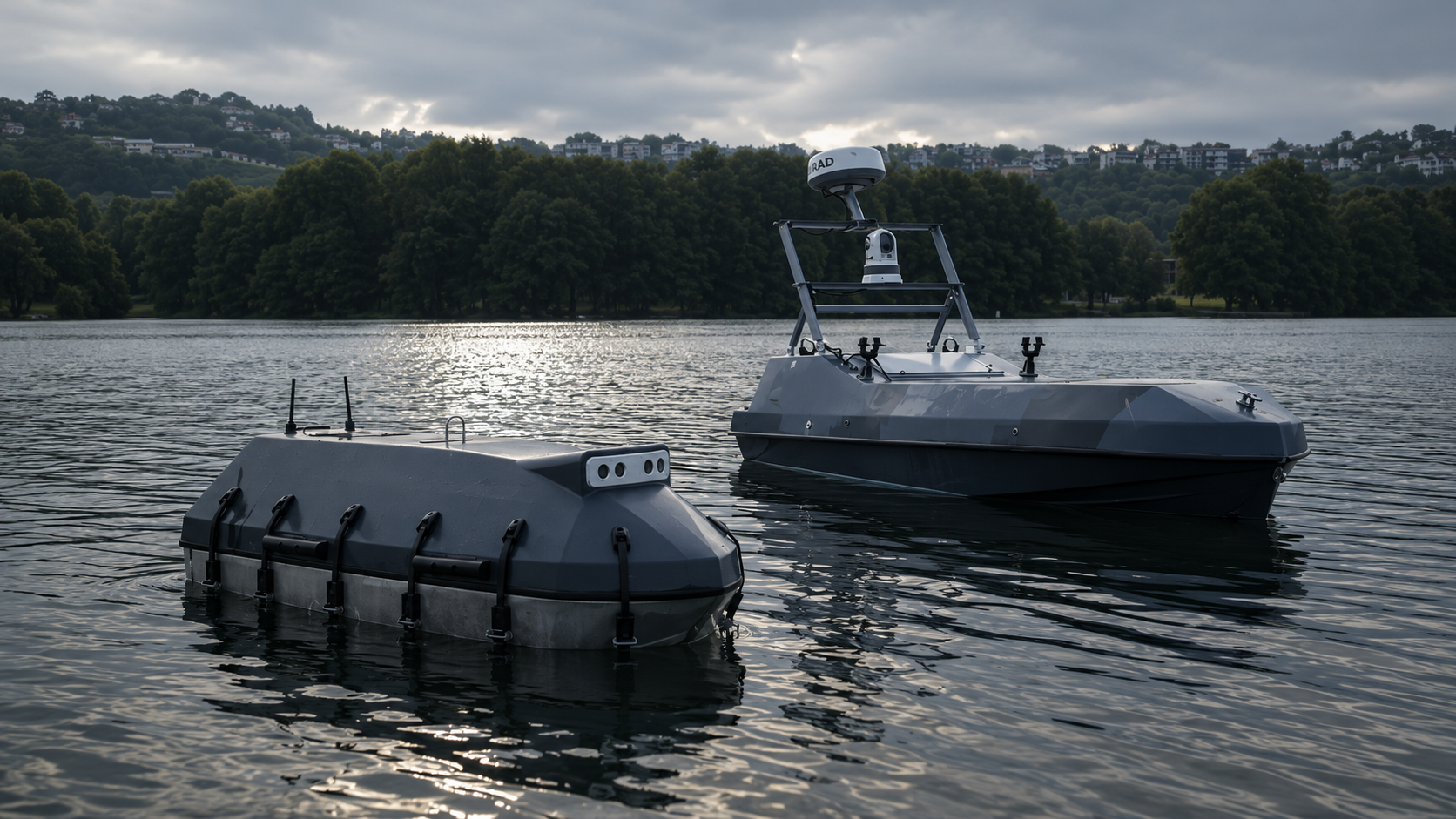
The transcript gives the outline in plain language. An Apache helicopter went down. Two American pilots needed rescue. A Saronic drone boat, built in Austin, helped carry out the mission. Public reporting outside the segment, including a Jerusalem Post report on the Strait of Hormuz rescue, also tied the operation to Saronic’s Corsair vessel.
The Strait of Hormuz is not the kind of place where small mistakes stay small. It is one of the world’s most sensitive waterways, and any rescue there carries military risk as well as human urgency. That is why the phrase “without putting additional Americans in harm’s way” lands so hard. It gets to the heart of why unmanned systems matter.
If the report’s account holds as the first publicly known mission of its kind, the milestone is not only technical. It is moral and practical. The U.S. military has long built its identity around bringing people home. An unmanned boat gave that promise a new set of hands.
Why the military sees more than a one-time win
A single rescue does not settle the future of war at sea. Still, it can change how commanders think. When a tool works during a live mission, it moves out of the “interesting experiment” box and into real planning.
That is the deeper point behind the report. Saronic is not pitching a boat that needs constant step-by-step steering. The company says its vessels can take on missions with far more independence than older unmanned craft. If that works at scale, commanders gain more choices. They can send an unmanned vessel ahead, hold back crewed assets, and keep human teams available for the parts of a mission that truly require them.
The wider move is visible across defense hardware, not only at sea. Similar ideas show up in autonomous systems for modern battlefield operations, where software-guided machines take on risky tasks that once demanded a crew. In that light, the drone boat rescue looks less like an odd one-off and more like part of a bigger shift.
How autonomous drone boats do the job with less hands-on control
The report drew a clear line between two models of unmanned boating. In the older model, a remote operator controls almost every move. The person on the other end is still doing most of the thinking in real time. The boat is unmanned, but it is not doing much on its own.
Saronic’s pitch is different. The company says these vessels can be assigned a mission and then carry it out with a much higher degree of autonomy. In plain English, people define the task, the route, and the goal. The boat’s software handles more of the travel and decision-making while humans watch over the mission.
That difference matters because it changes the workload. It also changes how many boats one team can manage.
Assigned a mission, then sent to do the job
Mission-based autonomy is the cleanest way to understand what Saronic is describing. A team gives the vessel its job, such as heading to a location, reaching a pickup point, or moving through a risky stretch of water. After that, the craft operates with less hands-on direction than a vessel that needs constant remote steering.
The software layer, often described as AI-driven autonomy, is what makes this possible. The report did not go into technical detail, but the core claim was clear: the boat is not waiting for a person to tell it every turn. It is built to carry out a plan.
That may sound like a small change, but it is not. A remote-controlled boat still ties up a human operator in a minute-by-minute task. A more autonomous boat turns that operator into a mission supervisor. The person still matters, but the job changes from steering to overseeing.
Why running several vessels at once matters
The report also pointed to a second shift. If a system needs less direct control, a team can oversee more than one vessel at the same time. That is where scale starts to appear.
At sea, scale is not only about having a bigger ship. It is about covering more water, watching more areas, and responding faster when a mission changes. A handful of unmanned boats can stretch a force farther than a single crewed platform, especially if the boats can stay on task without constant micromanagement.
This is also why drone boats make sense in dangerous waters. An unmanned craft can move first into places where commanders would rather not send a crew unless they have to. That does not remove risk from the mission, but it can shift risk away from people. For rescue work, surveillance, or support near a threat zone, that is a strong advantage.
Saronic’s push from Corsair to the 52-foot Mirage
The Fox News report did not stop with the rescue. It also showed where Saronic wants to go next. The company is building these vessels in Austin, Texas, and the next major platform named in the segment was the Mirage, a 52-foot autonomous ship.
That matters because the mission tied to the rescue involved the Corsair, while Mirage points to a larger class of work. Bigger hulls can carry more equipment, move farther, and remain on station longer. In military terms, that gives commanders more useful options.
A quick comparison helps:
| Vessel | What the report says | Why it matters |
|---|---|---|
| Corsair | Smaller Saronic drone boat tied to the rescue mission | It showed that an unmanned craft can help in a live recovery mission |
| Mirage | A 52-foot autonomous ship, more than twice the size of Corsair | It can travel farther, carry more, and stay in the fight longer |
The takeaway is straightforward. Saronic is not building one rescue boat. It is building a family of unmanned vessels for different jobs.
From Corsair to Mirage
Size changes what a vessel can do. The report said Mirage is more than twice the size of Corsair, and then spelled out why that matters: more range, more carrying capacity, and more staying power during a mission.
Those are not small upgrades. Range affects where the boat can go without support. Payload affects what it can bring with it. Endurance affects how long it can remain useful once it gets there. Put those together, and the move from Corsair to Mirage starts to look like a move from proof of concept to a broader operating tool.
That is also why the report used the phrase “bigger and more complex missions.” A larger autonomous vessel can do more than repeat the first success on a wider scale. It can take on jobs that a smaller craft simply cannot.
Why fast, low-cost production is part of the strategy
The strongest strategic point in the report may have been about cost and volume, not just software. Saronic’s CEO said the goal is to build autonomous vessels quickly, by the thousands, and at a fraction of the cost of traditional warships.
That changes the math. A navy built only around large, expensive ships cannot expand overnight. It also cannot easily absorb losses in a long contest. Smaller unmanned vessels create another layer of capacity, one that may be cheaper to field and easier to replace.
The company drew wider attention after the rescue, and The Wall Street Journal’s profile of the drone-boat maker put a national spotlight on that idea. Austin adds another piece to the story. This is not only boatbuilding in the old sense. It is software, autonomy, and manufacturing tied together in one defense product.
What unmanned rescue boats could change for the Navy
The Fox News segment made a bigger argument beneath the rescue story. These boats are not only about one recovery. They are about the shape of future naval power.
For the Navy, an unmanned boat can be a rescue platform, a support asset, or an extra set of eyes and hands in risky waters. For commanders, it offers a way to push capability forward without pushing people forward first. That is useful in a rescue mission, and it is just as useful in contested seas.
A new tool for rescue work and tense waters
Rescue missions are often chaotic. Time matters, weather matters, and the threat picture can shift fast. In those moments, an unmanned vessel adds a buffer between danger and the people trying to solve the problem.
That does not mean crewed ships disappear. It means the first move may not need to come from a human crew. A drone boat can reach the scene, support recovery, or hold a position while commanders decide what comes next. In a place like the Strait of Hormuz, even that modest shift can lower exposure.
The same logic applies beyond rescue. An unmanned boat can patrol, support, or extend a force’s reach in waters where commanders want more presence but less risk. That does not make it a cure-all. It makes it a useful tool in a larger mix.
Why production scale may matter as much as the boat itself
The report also tied Saronic’s work to a blunt shipbuilding problem. The company’s CEO said China can outbuild the United States “230 to 1” in shipbuilding capacity. That number is hard to ignore because it reframes the issue.
“China can outbuild us 230 to 1 in terms of shipbuilding capacity.”
If a rival can build far more hulls, then speed and cost become part of deterrence. The answer, in Saronic’s view, is not to copy a traditional fleet ship for ship. It is to add a cheaper class of autonomous vessels that can be built in large numbers.
That idea is compelling, but it still has to prove itself over time. Trust is earned at sea. These systems have to show reliability in rough conditions and during fast-moving missions. Military leaders also have to be comfortable with where human control ends and machine action begins. The rescue mission gave autonomy a strong headline. The next step is proving it can deliver that same confidence again and again.
Final thoughts
The image that sticks is simple: two downed pilots, a dangerous waterway, and an unmanned boat helping bring them back. That is why this story matters. Autonomous vessels are no longer a theory confined to tests and sales pitches.
Saronic’s rescue-linked Corsair, the larger Mirage, and the push to build these craft in large numbers all point in the same direction. The future at sea may depend less on sending more people into danger, and more on sending smarter machines first.