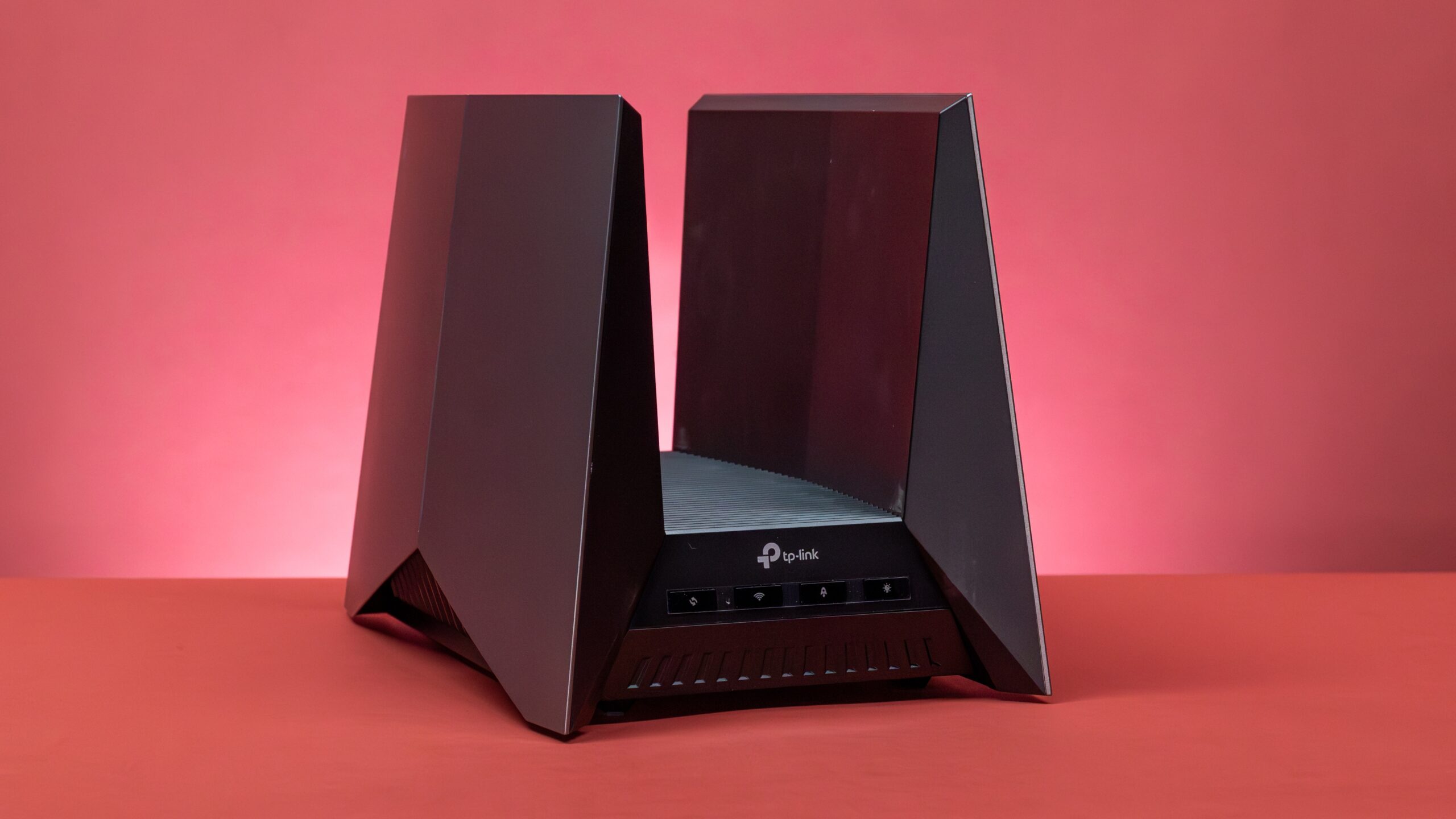
A lag spike at the wrong moment can wreck a match. That’s why a gaming router matters more than most people think.
When consoles, TVs, phones, and laptops all crowd the same network, a basic router starts to stumble. This top 10 leans hard toward TP-Link, with a few unnamed value picks mixed in, and the pattern is easy to spot once the specs show up.
The details below sort out which entries look strongest for gaming, and which ones stay too vague to judge with much confidence.
What a gaming router has to get right
A router built for gaming is not only about high top speed. The bigger issue is how well it holds up when the whole house is online at once. Low latency, stable coverage, and smart traffic control matter more than a flashy number on the box.
Features like QoS help push game traffic ahead of background downloads. Wi-Fi 6 adds better handling for busy networks, which matters when a console shares bandwidth with streaming, video calls, and smart-home devices. Beamforming and strong antenna placement also help because signal quality drops fast once walls and distance get involved.
Several TP-Link entries here also mention app-based controls through the Tether app. That matters more than it sounds. Easy device management, parental controls, guest access, and bandwidth priority turn a router from a black box into something you can actually manage.
That same pattern shows up in broader testing from PCMag’s best Wi-Fi routers for 2026 and RTINGS’ gaming router rankings. The strongest products are the ones that stay steady under load, not only the ones with the biggest speed claim.
Here’s the full list in plain English:
| Rank | Brand | What stands out | Notes |
|---|---|---|---|
| 10 | Unknown brand | Minimalist, durable, compact | Very few router-specific details |
| 9 | Unknown brand | Understated design, intuitive use | Again, not much networking data |
| 8 | TP-Link | Dual-band, up to 1200 Mbps, four antennas | First pick with clear router specs |
| 7 | TP-Link | Wi-Fi 6, beamforming, gigabit ports | Better fit for busier homes |
| 6 | Unknown brand | Value-focused, compact, practical | Missing speed and Wi-Fi details |
| 5 | Unknown brand | Durable, portable, easy to use | Still short on hard router specs |
| 4 | TP-Link | Dual-band 1200 Mbps, beamforming, app control | Strong all-around household choice |
| 3 | TP-Link | Wi-Fi 6, four high-gain antennas | Better device handling and control |
| 2 | TP-Link | Wi-Fi 6, reduced lag, network controls | Strong balance of speed and stability |
| 1 | TP-Link | Dual-band extender, dead-zone coverage | Solves range issues more than routing issues |
The split is obvious. TP-Link dominates once the descriptions move into real network features, while the unnamed picks lean on broad claims about build quality and value.
Ranks 10 through 6: the vague half of the list
#10: Unnamed minimalist pick
The tenth-place entry is described more like a general gadget than a router. The focus is on premium materials, a soft-touch finish, lightweight carry, and a sleek design that fits at home, at work, or on the go. That sounds pleasant enough, but it leaves out the details that matter in a gaming setup.
There is no stated speed class, no Wi-Fi standard, no antenna count, and no app or traffic-management feature. As a result, this one feels more like a placeholder than a serious gaming recommendation.
#9: Another unnamed value option
The ninth-place pick follows the same script. It promises durable materials, easy operation, and reliable daily use without any flashy branding. The language points to convenience and simplicity, which can be fine for basic networking gear.
Still, gaming routers live or die on specifics. Without any mention of latency tools, signal coverage, or even dual-band support, this entry is hard to place against better-documented options.
#8: TP-Link brings the first real specs
The list starts getting useful at number eight. This TP-Link model, shown on the #8 TP-Link listing, is described as a dual-band router with speeds up to 1,200 Mbps, four external antennas, and app-based setup through Tether.
That combination makes sense for smaller households, apartments, or anyone who wants a simple jump from ISP-provided hardware. Four antennas should help coverage, while 1,200 Mbps is enough for gaming, streaming, and calls across several devices, as long as expectations stay grounded. This looks like a practical entry point rather than a premium gaming box.
#7: A clearer step up with Wi-Fi 6
The seventh-place TP-Link router adds Wi-Fi 6, beamforming, multiple gigabit ports, and parental controls. That is a stronger set of features for a shared home network because Wi-Fi 6 handles congestion better than older standards.
Beamforming also matters here. Instead of broadcasting signal evenly in all directions, it helps focus the connection toward active devices. For gaming in a bedroom, office, or den that sits farther from the router, that can help keep performance steadier.
#6: Value-first, but still hard to pin down
The sixth-place unnamed pick returns to broad language. It is pitched as practical, durable, lightweight, and budget-friendly, with easy day-to-day use. That may sound appealing, but the same problem keeps showing up: there are no router-specific numbers to test against the TP-Link models.
Low latency depends on real network features, not only polished marketing copy.
By the end of the lower half, the list already tells its own story. Once the details get thin, the recommendations get hard to trust.
Ranks 5 through 1: TP-Link takes control of the top spots
#5: Another unnamed product with too little detail
Fifth place goes to one more unnamed device, and the pattern does not change much. The description highlights premium materials, durability, light weight, portability, and ease of use. It also frames the product as useful for beginners and more experienced users alike.
That may be true, but it still does not explain how the device performs as a router for online play. No wireless standard is mentioned. There is no coverage claim, no port layout, and no sign of QoS or app-level traffic controls. For a top-five slot, that is a thin case.
#4: A balanced TP-Link for everyday gaming
The fourth-place option is where the list starts feeling grounded again. On the #4 TP-Link router page, the feature set is clear: dual-band support, combined speeds up to 1,200 Mbps, four external antennas, beamforming, guest access, parental controls, and Tether app support.
That is the kind of router description that helps you picture real use. It is built for a home where gaming shares space with streaming, schoolwork, and remote work. The dual-band setup gives devices more breathing room, while beamforming and four antennas aim to hold the signal together across a larger area. It may not sound flashy, but this is the kind of practical router that often feels better day to day than a louder product with fewer controls.
#3: Wi-Fi 6 and stronger coverage
The third-place TP-Link router, shown on the #3 TP-Link product page, leans harder into modern home networking. It brings Wi-Fi 6, four high-gain antennas, device management through the Tether app, and the ability to prioritize traffic.
That last point matters for gaming. A router that lets you favor a console or gaming PC over background devices is more useful than one that simply claims high speed. The description also notes a compact, energy-efficient design, which will not decide a match, but it does suggest a router that fits cleanly into a normal home setup. This feels like one of the strongest true router picks in the whole group.
#2: The strongest router-focused description
Second place goes to another TP-Link Wi-Fi 6 model, listed on the #2 TP-Link Amazon page. The write-up emphasizes faster speeds, reduced lag, better capacity for many devices, bandwidth controls, robust encryption, and broad coverage through optimized antennas.
This is one of the better descriptions in the lineup because it speaks directly to the real causes of bad gaming performance. Lag often shows up when too many devices compete for airtime or when coverage breaks down in one part of the house. A router that manages both problems is worth more than one that only posts a high throughput number. On paper, this is the most complete router choice before the ranking takes a surprising turn at number one.
#1: A TP-Link Wi-Fi extender closes the list
The top slot goes to a TP-Link Wi-Fi extender, not a standard router. The device on the #1 TP-Link listing is described with dual-band support, one-touch setup, a compact plug-in design, and a focus on wiping out dead zones around the home.
That makes this entry a little unusual in a gaming-router ranking, but it also points to a real problem many players deal with. Sometimes lag is not coming from poor routing power. Sometimes the router sits too far away, and the signal collapses by the time it reaches the room where the console or PC lives.
In that case, an extender can matter more than replacing the router itself. It will not give you advanced routing controls, but it can help carry a usable signal to the basement, upstairs office, or back bedroom where online play used to feel shaky.
What this top 10 really says about gaming routers in 2026
The biggest takeaway is simple: once the descriptions turn specific, TP-Link owns the conversation. Wi-Fi 6, beamforming, high-gain antennas, app control, guest access, and bandwidth priority show up again and again. Those are the features that speak to real network behavior.
The second takeaway is that coverage still matters as much as raw speed. The fact that a Wi-Fi extender lands in the top spot says a lot. Home layout can hurt gaming performance just as much as an underpowered router. Thick walls, long hallways, and far-off bedrooms can turn a good internet plan into a bad experience.
That focus on range and stability lines up with Tom’s Hardware’s Wi-Fi router benchmarks, where gaming-friendly models stand out because they balance performance, control, and coverage.
The weak point in this list is also clear. The unnamed products never provide enough hard information to compete with the TP-Link entries. They may be decent devices, but without stated speeds, standards, antenna details, or management features, they stay in the fog.
A router cannot make your ISP faster, but it can stop your own home network from adding extra lag.
Final thoughts
A bad connection feels random when you’re in a match, but the pattern here is not random at all. The strongest picks are the routers that spell out Wi-Fi 6 support, coverage tools, and traffic control.
That leaves the unnamed entries as question marks, while the TP-Link options carry the list with clearer, more useful detail. If one idea rises above the rest, it is this: for gaming, stability beats vague promises every time.