Shanghai gets judged long before most people ever see it. Some expect the future. Others expect a polished facade that falls apart the moment you try to do anything on your own.
My first trip to mainland China started with that tension already in the air. I wanted to know what daily life felt like in a city where your phone is your wallet, your map, your taxi app, and sometimes your only lifeline. I also wanted to know if Shanghai was manageable with limited English, and if it was worth the hype at all.
After a few days in the city, the answer was clear. Shanghai was more confusing, more efficient, safer, and more visually striking than I expected.
Why Shanghai Felt Different the Moment I Landed
The visa stress made the trip feel real fast
This trip nearly fell apart before it even began. My online visa application was denied, and I was told to apply in person instead. That meant boarding a flight to Shanghai without total confidence that I would be allowed in.
That uncertainty changed the mood of the whole journey. Excitement was still there, but it sat next to a low hum of doubt all the way to the immigration line. Once I finally made it through, the relief was immediate.
The entry process itself was simple enough. I had to fill out an arrival card, complete another form for temporary visitors, and show proof of accommodation and a flight out of the country. After that, I was in.
From the airport to the hotel, every small task felt new
I had been to Hong Kong and Macau before, but mainland China felt different almost at once. The same travel habits didn’t carry over. Apps, maps, taxis, payments, even internet access all ran through a different system.
Booking a Didi, China’s version of Uber, went smoothly. That first small win helped. So did hotel check-in, even with the language barrier. I stayed at the Golden Tulip Bund New Asia, and the room was simple, clean, and comfortable. The only surprise was the bathroom, which opened straight into the bedroom. The bigger surprise was the view. From the window, I could see toward the Bund.
That first evening made one thing obvious. Shanghai wasn’t going to feel like a softer version of somewhere I’d already been. It was going to ask for fresh habits from the start.
First Impressions of Shanghai on the Street
A clean city with a busy pulse
My first walk through Shanghai felt calmer than I expected. The city moved fast, but it didn’t feel chaotic. Streets were clean, bike lanes were clearly separated from walking paths, and that small bit of order changed the mood right away.
In many big Asian cities, walking can feel like a constant dodge between scooters, crowds, and noise. Shanghai felt busy, yet controlled. There was still motion everywhere, but it flowed instead of crashing into itself.
The city also had a look I didn’t expect. Some blocks felt old and grounded, while others looked polished and almost futuristic. That contrast gave Shanghai character. It didn’t feel sterile. It felt layered.
Why the malls felt like their own world
A simple dinner plan turned into a first look at how huge Shanghai can feel indoors too. On the way to Haidilao, I wandered into a mall and kept finding more. First came the global brands. Then came the anime stores, gacha machines, an arcade, a Pokemon Center, and entire sections that felt built for fans of pop culture.
What struck me most was the scale. I had expected a normal mall. Instead, it felt like a small city folded into several floors.
That surprise kept repeating across Shanghai. Spaces that looked ordinary from outside often opened into something much larger, shinier, or stranger than expected. Other travelers describe that same feeling in their own first impressions of Shanghai, and I understood it right away.
What Hot Pot in Shanghai Taught Me About Food and Service
Haidilao was more than dinner, it felt like a show
My first meal in Shanghai was hot pot at Haidilao, and it set the bar high. I’d never had hot pot before, so even the setup felt new. We were moved to a bigger table, helped through the menu, and guided through the basics without anyone making the process feel stiff.
The order included premium fatty beef, sirloin, live shrimp, and broths with very different personalities. One was mild and tomato-based. The other carried the kind of spice that creeps up on you and then stays for a while.
The sauces changed everything. A peanut-based sauce with the shrimp was especially good, rich and salty in a way that balanced the heat. Then the meal took another turn when staff put on a noodle performance at the table. At that point, dinner felt closer to theater.
By the end of the night, Haidilao had already become one of the best restaurant experiences of the trip. The full meal came to 380 RMB for the group, and for the amount of food and the level of service, it felt like serious value.
Cheap meals, big portions, and a different dining rhythm
That first dinner wasn’t a one-off. The next few days kept proving how affordable Shanghai food could be. Breakfast from Lawson was cheap and surprisingly good. Dumplings near Nanjing Road were even more striking. A few portions of xiaolongbao and other dumplings barely made a dent in the wallet, yet the meal felt satisfying.
Yu Garden added more snack-style eating, including soup dumplings that were hot enough to punish impatience and a pastry stuffed with savory meat. Later, duck in a tourist-heavy spot cost more, but even that felt fair for the setting.
One part took time to adjust to. In several restaurants, dishes arrived whenever they were ready, not all at once. At first, that felt disjointed. I was used to everyone at the table being served together. After a while, it simply felt like the local rhythm.
The Phone Dependence That Changed Everything
Why losing data felt bigger in Shanghai than anywhere else
The biggest culture shock in Shanghai wasn’t the skyline or the food. It was how much daily life ran through a screen.
In Shanghai, your phone isn’t a convenience. It’s your wallet, your map, your taxi, and your backup plan.
That became painfully clear in the French Concession, when my data plan ran out. Suddenly I couldn’t navigate properly, couldn’t sort out payments, and couldn’t easily search for food nearby. A normal travel annoyance turned into a real problem because the phone wasn’t a side tool. It was the system itself.
That setup fits a broader pattern in China’s approach to tech deployment, where everyday tools are pushed into daily use at scale. In Shanghai, that scale is impossible to miss.
Alipay, WeChat Pay, and the hidden barrier for visitors
At first, mobile payments felt impressive. I linked a card to Alipay, scanned QR codes, and paid for snacks and convenience store food within seconds. Then the cracks showed.
At Yu Garden and later at the fake market, payment apps suddenly asked for more verification tied to passport details. I didn’t have my passport on me, which meant I couldn’t complete the process. More than once, a friend had to step in and pay through his phone.
That was the hidden barrier. Once the apps work, they feel smooth. When they don’t, simple purchases can stall fast. If you’ve read another first-time Shanghai guide, you’ll see the same warning come up again and again. The setup matters more here than in most places.
Can You Get Around Shanghai With Limited English?
Translation apps helped, but they were not magic
I managed to get around Shanghai, but not because communication was easy. English was much less common than I expected, even in central areas and tourist-heavy spots.
Translation apps helped with basics like ordering food, checking directions, and searching for restaurants. Still, they often only got me halfway there. Looking for camera stores on Nanjing Road became a mess partly because digital directions were imperfect and partly because quick clarifying conversations weren’t possible.
The French Concession brought the same problem in a softer form. I asked a local for food tips, caught fragments like “Italian” and “Japanese,” and then had to piece the rest together with maps and trial and error.
Friendly people made the barrier feel smaller
Even when language failed, people usually tried to help. Hotel staff got me checked in. Restaurant workers guided me through menus. Shopkeepers answered questions as best they could. A stranger in Yu Garden chatted for a moment after I mistook her for a local, only to learn she was visiting from Japan.
That warmth mattered. The barrier was real, but it rarely felt hostile. Shanghai asked for patience and a bit of improvisation, not fluency.
The Bund, Yu Garden, and Shanghai’s Skyline Proved the City Is Worth Seeing
Why the Bund lives up to the hype
The moment Shanghai clicked for me was standing in front of the skyline at sunset. The Bund has one of those views that already feels famous before you arrive, and then it still manages to land.
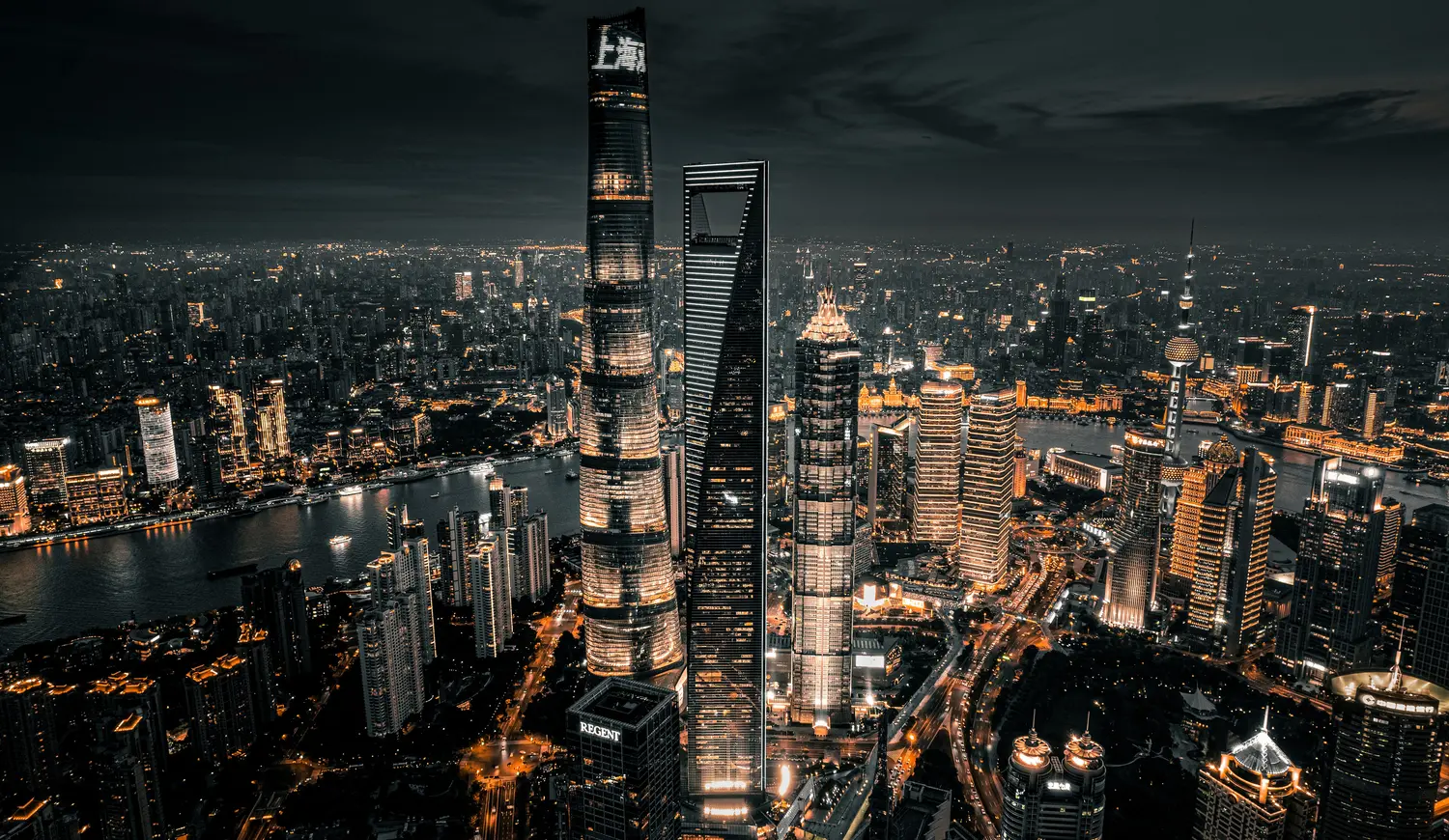
Across the river, Pudong looked sharp and unreal, packed with towers that made the whole scene feel cinematic. The Oriental Pearl Tower stood out at once. As the light dropped, the skyline shifted from impressive to magnetic.
Later, around Lujiazui, the city leaned into that futuristic feel even more. Elevated walkways, giant towers, glass everywhere, and the glow of traffic below gave the area the “cyberpunk” energy people always talk about. Some photo spots were crowded, and one famous escalator shot was ruined because the escalators were turned off. Still, Exit 8 near Lujiazui ended up being better, quieter, and easier for clean skyline photos.
Yu Garden showed a different side of Shanghai at night
If the Bund was all steel and scale, Yu Garden was color and motion. At night, the area came alive with lights, food stalls, tourists, and traditional-style buildings that looked almost theatrical against the dark sky.
I ate my way through the area in small bites, including soup dumplings and a savory pastry, while trying to sort out failing payment apps between orders. Blue smoke drifted through one section. Crowds gathered for photos in another. Every few steps, the mood shifted.
That contrast is part of what made Shanghai memorable. The city could give you a riverfront skyline that felt global, then turn around and hand you a night market atmosphere full of heat, noise, and snack stalls.
Fake Markets, Shopping Malls, and the Surprising Side of Everyday Shanghai
The fake market was a lesson in bargaining
Shanghai’s biggest fake market was a different kind of performance. Sellers called out prices with a straight face, and bargaining started almost the moment you touched anything.
I bought a magnet after a quick round of back and forth, then tried to haggle for a shirt. The first quote was absurdly high. The final price was much lower, though it still felt like I paid more than I should have. That was part of the fun and part of the trap.
The market also showed a split in Shanghai that came up often. Some spaces felt sleek and expensive, like IFC Mall and its luxury brands. Others felt raw, touristy, and built around negotiation.
Finding an SD card became its own Shanghai adventure
A missing SD card turned into a four-hour detour across Nanjing Road. I looked for a DJI store that either didn’t exist or wasn’t where the map said it was. I checked another store. Wrong card. I tried again. Nothing.
Then a Didi ride to a camera complex solved the problem in five minutes.
That little story summed up Shanghai well. The city can waste your time and impress you in the same afternoon.
Shanghai Tower, Safety, and Modern Life
The view from Shanghai Tower was unforgettable
Shanghai Tower gave me the clearest view of the city and the clearest sense of its size. From the observation deck, the river, the Bund, the Oriental Pearl Tower, and the wide spread of Pudong all sat beneath me in one huge frame.
The height was thrilling, but one detail stuck with me for a different reason. Around me, people sat in front of one of the great urban views in the world and kept scrolling on their phones. That scene fit everything I’d felt on the ground. Shanghai can be dazzling, but the pull of the screen never goes away.
Safety felt normal in a way that stood out
By day four, another impression had settled in. Shanghai felt very safe.
That feeling sharpened after visiting a commercial gym, where a day pass cost only 10 RMB. People left phones and tablets sitting out in the open without worry. Back home in Sweden, that would have felt risky. Here, it felt routine.
Safety changes how a city feels in your body. You stop checking over your shoulder. You relax more. You notice more. For me, that became one of Shanghai’s strongest selling points, even with the cameras, the app dependence, and the occasional frustration.
Final Thoughts
Shanghai wasn’t what I expected, but the surprise worked in its favor. The city was polished without feeling empty, efficient without feeling easy, and modern in ways that were both impressive and inconvenient.
What stayed with me most was the contrast. You can eat a cheap plate of dumplings at lunch, struggle with a frozen payment app by afternoon, then watch one of the best skylines on earth light up after dark. That mix made Shanghai feel alive.
I left with plenty of friction points in mind, especially around phone dependence and language. I also left wanting to come back, which says more than any pre-trip opinion ever could.