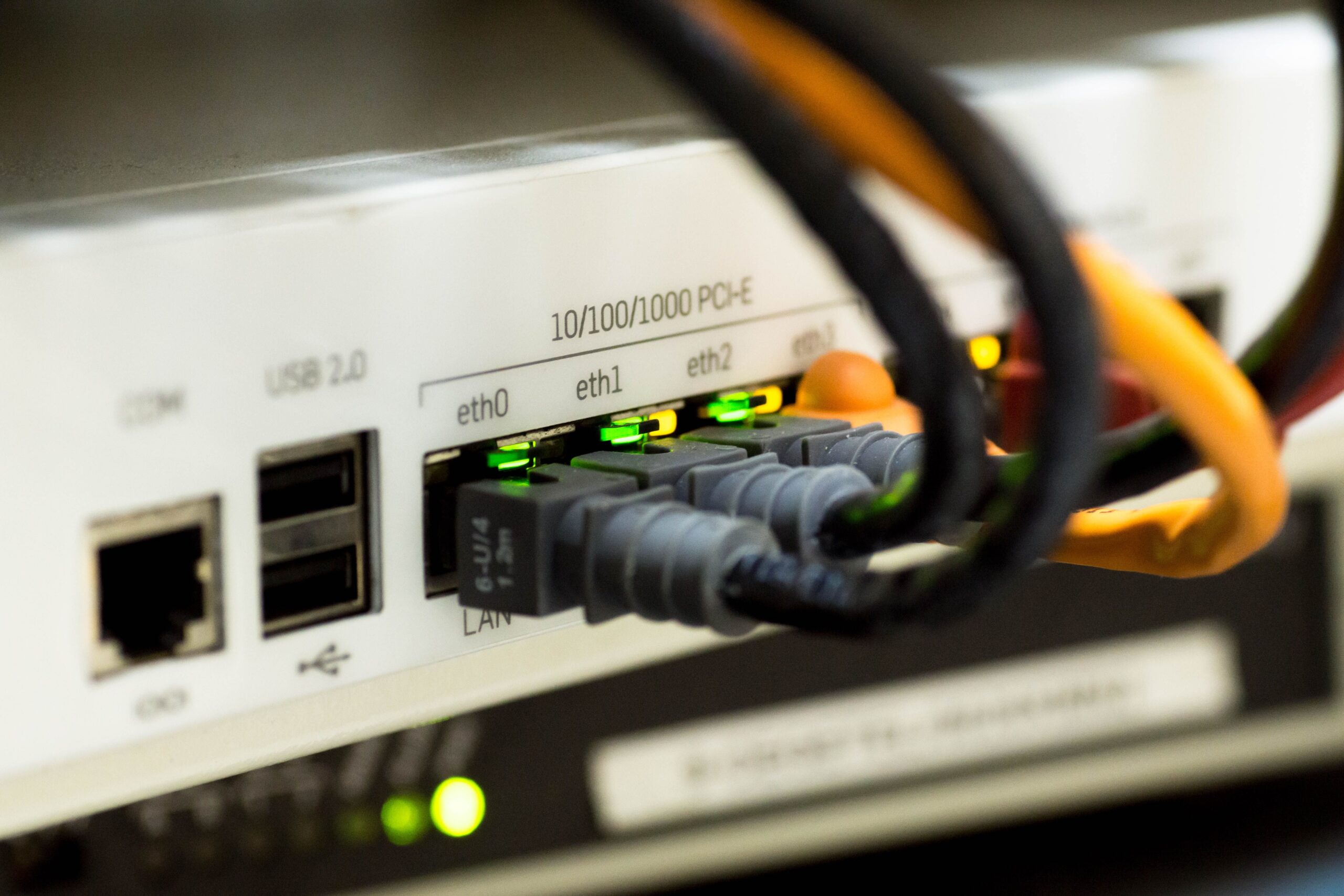
PoE changed office and campus wiring because one cable could carry data and power at the same time. Now that ceiling is getting low.
In a conversation with David Bombal, Cisco’s Denise Lee and NTT DATA’s Stephen Kelly described a newer option, Class 4 Fault Managed Power, that can move much more power while staying touch-safe. That matters because AI is driving up data center demand, energy costs are rising, and building teams need safer, faster installs.
The bigger question is where this fits. PoE is still useful, but the power needs around it are changing fast.
Why PoE is reaching its limit
What PoE still does well
PoE earned its place because it made common network installs simpler. Access points, cameras, sensors, phones, and similar endpoints could all run over the same cabling system that already handled data.
That changed how buildings were wired. In the discussion, Lee pointed to Cisco’s Paris office as an example of how much can disappear into the background when low-power devices are fed through the network, not through separate electrical runs.
PoE is still the right tool for that job. Even modern versions top out around 90 to 100 watts, which is enough for many edge devices but not much beyond that. A good side-by-side look at Fault-Managed Power vs Power over Ethernet shows where PoE’s ceiling sits today.
Why today’s loads need more
The pressure comes from devices that sit above the endpoint layer. Switches, appliances, servers, and newer building systems need more power than PoE was built to carry.
At the same time, AI is changing the math inside data centers. Higher rack density means more compute, more heat, and more stress on power delivery. That doesn’t only affect hyperscale sites. It affects enterprise data centers, office retrofits, and any building team trying to add more connected equipment without dragging in heavy electrical work for every change.
So the need isn’t “PoE, but a bit bigger.” The need is a safer way to deliver much more power, with installation practices that still feel familiar to networking and low-voltage teams.
What Class 4 Fault Managed Power actually changes
How fault management makes higher power safer
Lee described Class 4 Fault Managed Power as the first new class of power in 40 years in the US National Electrical Code. The name is plain, but it tells you the point: the system watches for faults and cuts power fast.
The architecture starts with a transmitter chassis. Standard AC power enters the back, then intelligent transmitter modules in the front push out high-voltage power. Those modules act like smart breakers. If they detect a short circuit, unsafe condition, or fault that could harm a person or start a fire, they shut the circuit down almost instantly.
That matters in dense environments. Lee warned that arc flash risk climbs as power density climbs, and in a data center even dust can become part of a bad chain of events. For a more technical look at the cabling side, the IWCS overview of Class 4 systems is a useful reference. The NECA introduction to Class 4 Fault Managed Power also explains how these systems limit fault energy.
Why touch-safe DC power matters
The phrase that grabs attention is “touch-safe up to 400V DC.” Under normal circumstances, few people want to go near 380V DC. That level of voltage usually sounds like a hard boundary for trained electrical work.
Fault management changes that conversation. In the discussion, both guests said the same cabling practices used for PoE can apply here. That means a network engineer or low-voltage installer can work with the system without being a certified electrician for that part of the job.
That doesn’t remove electricians from the picture. Main electrical infrastructure, heavy labor, and high-risk work still need certified pros. What changes is the amount of work that can move into safer, faster installation paths. With a global shortage of electricians already in place, that matters for both labor and safety.
The jump in available power is the whole point
Lee held up two cables to make the contrast easy to see. One was a standard PoE cable. The other was a Panduit cable built for fault-managed power.
This is the basic comparison they laid out:
| Power method | Common role | Power level mentioned | Installation approach |
|---|---|---|---|
| PoE | Access points, cameras, sensors, phones | About 100W | Network-style cabling |
| Class 4 FMP | Switches, appliances, servers, higher-power systems | 1,000W per pair, up to 8,000W across eight pairs in the example shown | Similar low-voltage cabling practices, with fault-managed safety |
The takeaway is simple. PoE stays strong at the edge, while Class 4 opens a much higher-power lane.
Why AI data centers are driving the shift
The hidden cost of AC to DC conversion
Power waste starts long before a server does useful work. Lee said each AC-to-DC conversion step costs a couple of percentage points, and a data center may have three to six of those hops.
Losses also build up before power even enters the building. She put US transmission line losses alone at roughly 5% to 20%, depending on distance and delivery. Once the power arrives, every extra conversion trims a little more away.
That is why DC matters again. Solar is DC-native. Many renewable sources fit more naturally with DC paths, and some data center designs are moving in that direction as well. The old AC versus DC debate is no longer a history lesson when AI infrastructure is hungry for every watt it can keep.
That broader issue of AI data center energy demands is already pushing this topic beyond engineering teams. Communities, regulators, and operators all have a stake in how power reaches the rack.
Why cooling and non-useful power drain budgets
Kelly tied the power story to a business story. If more compute demands more electricity, then waste becomes expensive fast. In some places, it also becomes political. He mentioned Ireland as one example where local communities have pushed back on new data centers because of energy pressure.
Lee’s example put hard numbers on the problem:
A 5 MW, air-cooled data center that moves to direct liquid cooling and fault managed power could cut energy costs by 75% and get 2.3x the compute for the same amount of energy.
That figure did not include labor or materials. Those could add more savings.
She also said 65% of the energy in legacy data centers, the kind built around average 10 kW racks, goes to non-useful power. That means cooling, distribution losses, and other overhead instead of compute. Put plainly, operators are paying a large bill for energy that never reaches useful work.
Liquid cooling helps on another front too. It reduces fan noise. That can make facilities easier on nearby communities, although noise is only one part of site selection. Water scarcity, grid pressure, and delayed infrastructure projects all shape whether a new build moves ahead.
How Fault Managed Power could change buildings and retrofits
Why retrofits may be the biggest opportunity
One of the strongest points in the discussion was that this is not only a new-build story. Many commercial buildings have a 30 to 40-year life cycle, and plenty of those buildings were designed before modern networking became part of daily operations.
Lee pointed to a huge trigger for change: about $3 trillion in building refinancing is coming up globally over the next two years. Even if only part of that money goes into upgrades, many owners will be rethinking cabling, power, Wi-Fi, and building systems at the same time.
That makes retrofits a major opening. Post-COVID office design has already trained facilities and IT teams to move desks, add video rooms, shift layouts, and support hybrid work. Flexible power distribution fits that pattern far better than traditional electrical rebuilds every time a space changes.
Less conduit, less copper, less labor complexity
Traditional electrical work in the US often means steel conduit, bent pipe, and expensive labor. In data centers, it can also mean large copper bus bars, plus the weight and cost that come with them.
Lee said fault-managed power changes that physical build. Cables can sit neatly in structured cable trays, side by side, instead of demanding the same heavy pathway rules as standard electrical distribution. That reduces material needs and can speed up deployment.
Kelly tied that to day-to-day business requests. If a company wants to move a video conferencing unit, add an access point, or rework desks in a busy office, the speed of change matters. Touch-safe power gives network teams more room to respond without waiting for a full electrical project every time.
PoE is still useful, even if FMP grows fast
None of this means PoE disappears. Both guests were clear on that point.
PoE remains a good fit for access points, cameras, sensors, phones, and similar endpoints. Fault Managed Power expands the kinds of gear that can be powered through cabling practices familiar to IT teams, including switches, appliances, servers, and equipment that would normally expect AC power supplies.
That is why the better question is not “Will this replace PoE?” The better question is where PoE stops and where Class 4 begins.
Will electricians be replaced, or will the job just change?
New skill paths matter more than job replacement fears
Bombal raised an obvious concern. When Voice over IP grew, traditional telephony work changed fast. Could the same happen here?
Lee and Kelly did not frame it that way. Their argument was that the market already has a shortage of electricians, and the coming wave of power demand could push more workers into rushed, less safe conditions. A touch-safe system gives teams another option.
Electricians are still needed. Heavy electrical work does not go away. What changes is the split between high-voltage infrastructure work and safe power distribution work that can move to low-voltage or network-oriented teams.
That opens new career paths. People with telecom backgrounds already understand why DC-to-DC systems are appealing. New entrants can also learn a mix of networking and power without treating electricity as a field they must avoid.
Why free training is part of the pitch
Cisco has started free training and badging around energy networking systems and fault-managed power with Panduit. Lee also mentioned Black Belt partner training, Cisco Learning, Cisco University, and executive white papers aimed at different audiences.
That matters because this technology cuts across departments. It does not sit neatly with facilities, IT, or real estate alone.
Kelly also pointed to another adoption tool: data. Cisco exposed telemetry across its portfolio through APIs, and NTT used that data to build a carbon calculator. The point was not moral pressure. The point was proof. Teams can show energy savings, cost savings, and carbon impact in numbers that a finance lead or operations head can understand.
Why Cisco, NTT DATA, and Panduit matter in this story
This is bigger than a single-vendor idea
New power systems do not scale on good demos alone. They need hardware, standards work, channel training, and buyers willing to test them in live environments.
That is where this partnership matters. Cisco and NTT DATA have worked together for 35 years, and Kelly said NTT operates in more than 70 countries with tens of thousands of customers. He also described NTT as a roughly $30 billion business that spends about $3.5 billion a year on R&D. More on that relationship is available on the Cisco and NTT DATA partnership page.
Panduit adds the hardware side. Lee said Panduit already has UL-certified fault-managed power units on the market, and the conversation focused on getting those systems into early-adopter accounts.
Adoption depends on education as much as hardware
Lee was direct about the biggest pushback. People first have to wrap their heads around the idea that touch-safe high-voltage DC is possible.
That challenge is partly technical, but it is also organizational. Facilities teams may view it as electrical. IT teams may view it as outside their lane. Education helps close that gap, which is why the rollout includes material for executives, engineers, students, and people already working in electrical or IT roles.
The timing also helps. Buyers are staring at rising AI infrastructure costs, and big tech data center investment trends have made power spending harder to ignore. When a new system offers lower energy waste, safer installs, and simpler materials, people pay attention fast.
Where PoE ends and Fault Managed Power begins
PoE still has a strong future at the edge. Cameras, phones, sensors, and access points are not going away, and PoE remains a clean fit for them.
Class 4 Fault Managed Power looks more like an expansion of networked power than a full replacement for PoE. Its case is strongest where power demand jumps past PoE’s ceiling, where AI makes energy waste expensive, and where safer, faster installation changes the economics of buildings and data centers.
The biggest shift may not be the cable itself. It may be the fact that power, cooling, networking, and building design can no longer stay in separate lanes.