Spring in Fukushima feels best from a slow train window. If you want cherry blossoms without the crush of Japan’s biggest cities, the Aizu region offers a gentler kind of season.
This route threads together a local rail ride, an old post town, a hot-spring district, and a castle wrapped in pink. The appeal isn’t only in the famous stops, because the quiet gaps between them carry just as much of the mood.
That feeling begins on the train and stays with you all the way to Tsuruga Castle.
A slow train through Fukushima sets the whole mood
The day begins on a local route often called the “Sakura Line” in spring. The nickname fits, because this isn’t a train that rushes past the season. It moves at a pace that lets the countryside unfold bit by bit, and that pace becomes part of the trip.
Small details make the ride memorable. The cars feel local rather than polished for tourists, and even the door button system reminds you that this is everyday rail travel in a rural part of Japan. Station announcements, short stops, and the steady hum of the line create a rhythm that feels far from the usual Tokyo and Kyoto rush.
Outside the window, the Aizu region opens up in layers. Houses sit farther apart, the roads look quieter, and the mountains frame the route instead of towering over it. Nothing on the ride tries too hard to impress you. That restraint is exactly why it works.
The charm of this trip is simple: the train doesn’t feel like a transfer between sights, it feels like one of the sights.
By the time the train reaches Yunokami Onsen Station, the tone is already set. You haven’t sprinted into spring. You’ve eased into it, one stop at a time. That matters, because the rest of the route keeps building on the same idea, that rural travel can feel full without feeling busy.
Ouchi-juku brings old Japan into spring
Yunokami Onsen is the doorway to one of the most memorable stops in the Aizu region, Ouchi-juku. The shift from rail line to old town is smooth in the best way. One moment you’re listening to train announcements, and the next you’re standing in a place that still looks shaped by another era.
Walking through Ouchi-juku’s old street
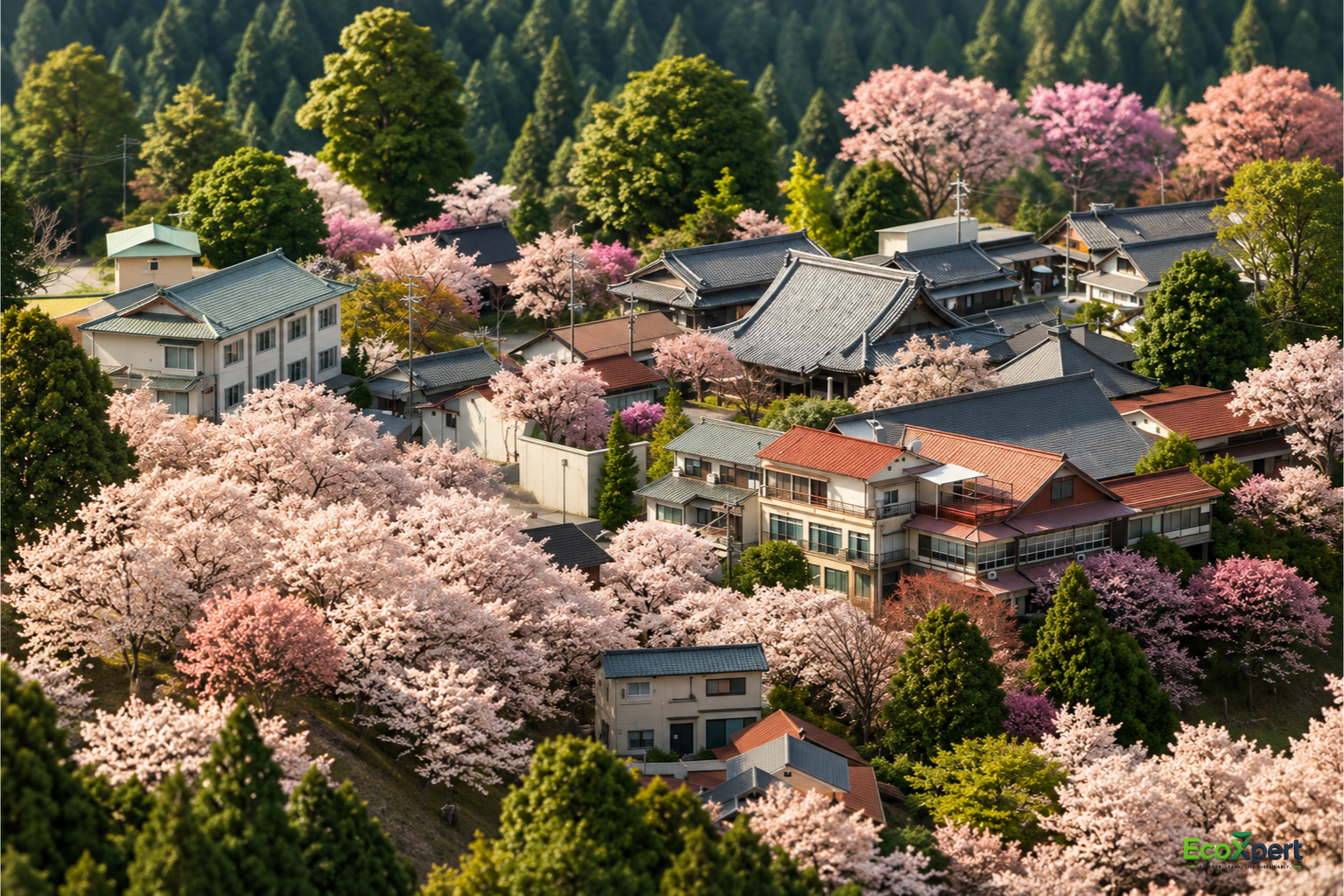
Ouchi-juku is a former post town, and that history is easy to feel as you walk its main street. The road is broad, the buildings are low, and the old-style houses give the whole village a look that feels almost untouched. If you want more background on the village itself, Fukushima Travel’s Ouchi-juku overview gives a helpful snapshot.
In spring, the town feels softer than a history site can sound on paper. Dark wood, pale blossoms, weathered roofs, and mountain air all sit together in a way that makes the place feel calm rather than staged. You can see why this stop stays with people. It offers beauty, but it also gives you space to slow down and notice it.
That slower pace shapes the walk. Instead of checking off landmarks, the day lingers on the street itself, the facades, the little signs, the views up the slope, and the quiet between passing visitors. Ouchi-juku doesn’t need a packed schedule. The town holds your attention by being exactly what it is.
Lunch at Misawaya and a quieter stop at Takakura Shrine
A place like Ouchi-juku almost asks for a meal that matches the setting, and Misawaya does exactly that with its Japanese leek soba. The dish is tied closely to the area, and it fits the town’s mood, warm, plain, and memorable without trying to be fancy. In a trip filled with visual beauty, this lunch adds something grounded and local.
The appeal of regional food here is how naturally it belongs to the place. You aren’t stepping away from the atmosphere when you sit down to eat. You’re extending it. The meal feels like part of the old town rather than a pause from it.
After lunch, Takakura Shrine changes the tone again. The shrine visit shifts the day away from the old street’s open charm and into something more inward. The sound drops, the pace slows, and the trip briefly stops feeling like sightseeing.
That contrast matters. Ouchi-juku gives you the broad picture first, then Takakura Shrine narrows your focus. Together, they make the visit feel fuller. You get the visual pleasure of the village, the comfort of a local meal, and then a quiet stop that adds depth to the afternoon.
Aizu-Wakamatsu and Higashiyama Onsen bring the day down to a softer pace
After the old-town walk, arriving at Aizu-Wakamatsu brings the trip back toward the city, but only briefly. The route then shifts to Higashiyama Onsen, and the mood changes at once. What had been a day of motion begins to settle into evening.
Higashiyama Onsen is a natural fit after Ouchi-juku because both places reward a slower step. Yet they feel different. Ouchi-juku looks back toward old travel routes and folk scenery, while Higashiyama Onsen feels built for rest. The streets, the inns, and the whole evening rhythm tell you to stop moving so fast.
A stroll through the onsen area works because it doesn’t demand much. You walk, look around, and let the place do the work. After trains, village paths, and sightseeing, that ease feels earned. Spring light in a hot-spring town has its own kind of beauty, softer and quieter than a blossom-viewing hotspot.
The stay at HARATAKI hot spring inn fits that mood well. A hot-spring inn isn’t only a place to sleep on this kind of route. It’s where the day changes shape. Sightseeing gives way to warmth, stillness, and the simple relief of sitting still after hours on foot.
Dinner at Unoya adds another local note to the evening. The meal comes across as friendly and unforced, the sort of stop that feels part of everyday town life rather than a polished attraction. That helps the whole route keep its balance. Even at the end of a full day, nothing feels overdone.
Tsuruga Castle is the grand spring finish
The final major scene is Tsuruga Castle, and it gives the route its clearest cherry blossom image. White walls, red roof tiles, stonework, and blooming trees come together in a way that feels both stately and gentle. If you want a bit of background on the site, GLTJP’s Tsuruga Castle guide is a useful companion.
Cherry blossoms can sometimes flatten a place, because every stop gets judged only by how many trees it has. Tsuruga Castle avoids that. The flowers matter, but so do the history, the shape of the grounds, and the way the castle rises through the branches. The blossoms don’t hide the place. They frame it.
That makes the stroll especially satisfying after everything that comes before it. You’ve already seen spring from a train, walked through an old village, eaten local soba, and rested in an onsen town. By the time you reach the castle, the season feels layered. The blossoms are beautiful, but they also feel connected to the rest of the journey.
Aizu’s history gives the castle extra weight. This isn’t a decorative end point tacked onto a spring trip. It’s a place where the mood of the region gathers into one view. The result is a finale that feels bright, spacious, and complete.
Why this Aizu spring route feels richer than a single sightseeing stop
What makes this trip work so well is the way each stop changes the tone without breaking the flow. You aren’t chasing one famous photo after another. You’re moving through a region that keeps showing a different face of spring.
This quick snapshot shows how the route builds that feeling:
| Stop | What stands out | Mood |
|---|---|---|
| Local train ride | Slow pace, rural stations, door-button stops | Calm |
| Ouchi-juku | Old street, historic houses, mountain setting | Nostalgic |
| Misawaya and Takakura Shrine | Regional food and a quieter spiritual stop | Grounded |
| Higashiyama Onsen | Evening stroll and hot-spring stay | Restful |
| Tsuruga Castle | Castle grounds under cherry blossoms | Open and bright |
The rhythm is the real strength. A lot of spring travel in Japan can feel crowded, rushed, and built around timing a single bloom report. This route works differently. It lets the season appear in pieces, through movement, food, old streets, baths, and one final castle walk.
That balance is why the trip feels fuller than a standard day of blossom viewing. You remember the scenery, of course, but you also remember the train sounds, the shift in temperature at dusk, and the way the day keeps softening as it goes. Rural Japan often leaves the strongest impression through those smaller moments.
Aizu shows how wide spring can feel
A spring trip doesn’t need packed parks and famous city rivers to stay in your mind. In Aizu, the moments that last are smaller, a train door button, soba in an old post town, steam at night, and castle trees moving in the breeze.
That’s what gives this route its strength. It turns spring into a full experience of movement, rest, and place, and that feels richer than a single perfect photo.