Buying a good phone around Rs 30,000 has become harder than it should be. Prices keep creeping up, yet many phones in this range still force you to pick one strength and live with two weak spots.
The Oppo Reno 14 looks different now because its price has dropped well below launch. At around Rs 32,000 with bank offers, it lands in a sweet spot where build quality, cameras, battery life, and daily performance matter more than headline specs.
That makes this one of the more interesting phones to revisit in 2026.
Why the price cut makes the Oppo Reno 14 matter
When the Reno 14 launched at around Rs 38,000, it had a tougher case to make. At that price, buyers expect near-flagship polish, and the competition starts to get uncomfortable. A year later, the picture looks better. Street pricing has brought it down to roughly Rs 33,999, and card offers can push it near Rs 31,999 or Rs 32,000.
That changes the conversation.
Phones around this price often fall into two camps. One group chases performance and gives you average cameras. The other group looks nice on paper but cuts something important, like zoom quality, water resistance, or build materials. The Reno 14 fits the increasingly rare middle ground. It feels like an all-rounder, not a specialist.
The Nothing Phone 4a is one obvious rival, and it has plenty going for it. Still, the Reno 14 answers with a more premium body, stronger durability, and a camera setup that is harder to find at this price. In a market where brands keep testing how much buyers will pay, a real price drop stands out. The Reno 14 earns attention because it now feels priced closer to what it should have cost in the first place.
Design and display feel more expensive than the price
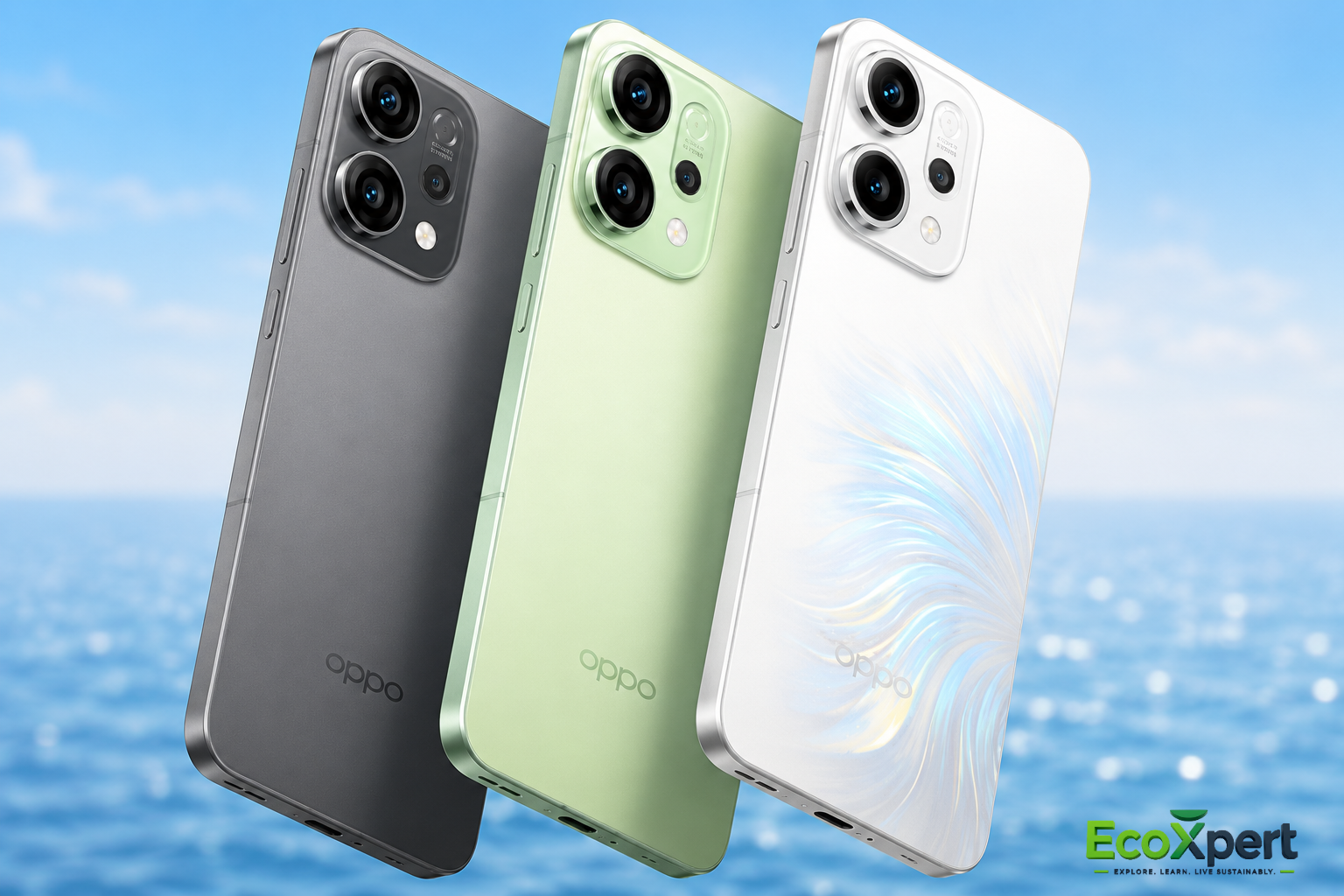
The Reno 14 gets the physical stuff right the moment you pick it up. It comes in a green finish and a white option, and the green version is the one that grabs attention. The back is a single-piece glass panel, the camera area has a subtle glow effect, and the frame is aluminum. That last part matters because metal frames are still uncommon in this segment.
It is also slim and easy to live with. At 7.4 mm and 187 grams, the phone avoids the bulky, brick-like feel that a lot of mid-range devices have now. The 6.59-inch size helps too. This isn’t a compact phone, but it doesn’t feel oversized either. If you’ve grown tired of giant slabs stretching every pocket and every thumb reach, the Reno 14 feels refreshingly balanced.
Durability is another strength. Oppo gives it an IP69 rating, which is still rare around this price. That doesn’t turn the phone into outdoor gear, but it does add peace of mind that many competitors skip.
The display keeps the good impression going. You get a 1.5K AMOLED panel with a 120 Hz refresh rate, and HDR support works in Netflix. Colors look rich, motion is smooth, and videos have the kind of punch most buyers want right away. Brightness is not the highest in the category, so this is not the screen that tries to win on lab numbers. Still, it holds up well enough outdoors and does the important job well.
If you want to cross-check the hardware basics, the Reno 14 spec sheet on GSMArena lines up with the package here: a 6.59-inch display, Dimensity 8350 chip, and a 6,000 mAh battery.
Performance, battery life, and software make daily use easy
The Reno 14 runs on the Dimensity 8350, paired in this variant with 8 GB of RAM and 256 GB of UFS 3.1 storage. That combination doesn’t scream “gaming monster,” but it is strong enough to feel quick in normal use. App launches are fast, animations stay smooth, and multitasking doesn’t turn messy after a few days.
For gaming, the story is good, with limits. BGMI can run at 90 fps, Call of Duty works without trouble, and Genshin Impact is playable on medium settings. So yes, this phone can game. No, it is not the best choice if your top priority is long sessions at high settings with the lowest possible heat. Performance-first phones still make more sense for that kind of buyer.
Battery life is one of the easiest parts to like. Oppo packs in a 6,000 mAh battery, and that size lands in a nice middle ground. It is larger than the old 5,000 mAh standard, but it doesn’t drag the phone into heavy territory. In regular use, with social apps, calls, video, and some camera time, the phone delivered around seven to eight hours of screen-on time. That is strong for a phone this slim.
Charging is fast enough that battery anxiety never hangs around for long. The bundled 80 W charger can fill the phone in under an hour, which keeps the Reno 14 feeling convenient day after day.
Software is mostly smooth too. The phone has already received ColorOS 16 with Android 16, and Oppo says more updates are still on the way. The support message is a bit messy because Oppo also talks about five generations of ColorOS updates, which is not as clear as a plain OS update promise should be. Even so, the general outlook is solid. The bad news comes later, because ColorOS still arrives with too much extra baggage out of the box.
The cameras are the Reno 14’s biggest reason to exist
This is where the Reno 14 starts to separate itself from many phones around Rs 30,000. Instead of loading the spec sheet with one flashy number and leaving the rest weak, Oppo gives the camera system some real range.
You get a 50 MP main camera, a 50 MP 3.5x telephoto camera with OIS, an 8 MP ultra-wide, and a 50 MP front camera with autofocus. That telephoto lens is the star of the setup. Plenty of phones in this price band still treat zoom as an afterthought, and some even cut back to a single useful rear camera. Oppo doesn’t.
In daylight, the main camera produces sharp, colorful photos with good contrast and solid HDR control. Highlights stay in check, shadows keep detail, and the images have the kind of look most people like right away. Low-light shots also hold up well, which matters more than benchmark bragging when you’re taking photos indoors, at dinner, or during events.
The telephoto camera is the more interesting part. At 3.5x, it is useful in real life, not just on a specs card. This is the lens you want for stage shots, candid portraits, wedding moments, and festival photos. It brings you closer without flattening everything into mush, and the results have detail and pleasing color.
The selfie camera also deserves credit. A 50 MP front camera with autofocus is still uncommon here, and it shows in the output. The field of view is fairly wide, skin tones look natural, and facial detail stays strong without turning harsh. If selfies matter, the Reno 14 is comfortably above average.
Video is well-covered too. The phone can shoot 4K at 60 fps on both rear cameras, and the front camera also supports 4K 60 fps. That is a strong set for a phone in this class.
Reno 14 vs Nothing Phone 4a: Oppo wins the camera round
The Nothing Phone 4a is the clearest comparison because it also brings a 3.5x telephoto camera around the same price. This is not a mismatch on paper. In practice, Oppo comes out ahead more often.
The differences are easiest to read in side-by-side use:
| Camera test | Oppo Reno 14 | Nothing Phone 4a |
|---|---|---|
| Main camera detail | Sharper detail and more natural color | Higher contrast, less balanced look |
| Telephoto shots | Better detail, cleaner shadows, truer color | Sometimes close, but less consistent |
| 10x and 20x zoom | Similar base detail, stronger color handling | More oversharpening in many shots |
| Portraits | Better skin tone and edge detection | Yellow tint on faces, more artificial look |
| Selfies | Wider view, better detail, stronger skin tones | Clear step behind Oppo |
| Video | 4K 60 fps on rear and front | Competitive setup, but still behind in image style |
On the main camera, Reno photos tend to keep more detail while staying closer to real-life color. Nothing often pushes a more contrast-heavy look, which can seem punchy at first but doesn’t always age well once you zoom in.
The telephoto battle is tighter than expected. In some scenes, Nothing gets close. Still, Reno keeps better shadows and more believable color. Once you move into portraits, the gap widens. Faces look more balanced on the Reno 14, and edge detection is cleaner. Even under studio lights, Nothing can add an unnatural yellow cast.
Selfies make the difference even clearer. Reno’s autofocus front camera gives it an easy edge in sharpness, color, and overall polish. Purely on cameras, Oppo wins this matchup without much debate.
The weak spots are real, and they will matter to some buyers
The Reno 14 is easy to like, but it is not flawless.
The first miss is NFC. Oppo leaves it out, and that is harder to excuse in 2026 than it used to be. If you rely on tap-to-pay or other NFC-based features, this is a real limitation. There is also no eSIM support, which is common in this price band but still disappointing.
Next comes the software clutter. ColorOS runs smoothly, but the out-of-box setup includes a lot of bloatware. You get pre-installed apps, pre-installed games, and Oppo’s “hot apps” style suggestions. Most of it can be removed, yet that doesn’t change the first impression. Compared with the cleaner feel of Nothing OS, Motorola, or even OxygenOS, Oppo’s software asks for more cleanup than it should.
The speakers are another compromise. You do get stereo speakers, and they can get loud enough for videos, reels, and casual use. The problem is depth. Bass is weak, and music lacks the fullness you expect from a phone that otherwise feels premium.
Heat is the last concern, and it is the one gamers should take most seriously. In heavy gaming or long video recording sessions, the Reno 14 can get warm. That doesn’t cancel out its strengths, but it does put a clear ceiling on what this phone is built for. It is better at everyday balance than sustained stress. That lines up with owner chatter in a mid-2026 Reno 14 discussion on Reddit, where battery life and cameras get praise while thermals still come up in tougher use.
Who should buy the Oppo Reno 14 in 2026
The Reno 14 makes the most sense for buyers who want one phone that does almost everything well. It has a premium build, a comfortable size, strong battery life, fast charging, and a camera system that is better than most of the field at this price. That is a hard mix to find now.
It is also a good pick for people who care more about the whole experience than raw benchmark flex. The design feels expensive. The telephoto camera adds real value. The battery holds up through long days. In other words, it feels like a phone built for normal life, not just comparison charts.
At its current discounted price, though, the Reno 14 lands in a strong position. Around Rs 32,000, it is one of the best-balanced phones you can buy. That balance is what makes it underrated.
Final thoughts
Phone prices keep rising, so value now feels rarer than it used to. The Oppo Reno 14 stands out because its lower price finally matches what it offers.
It is not the best gaming phone in the segment, and it does have some annoying omissions. Still, if your priority is a polished all-rounder with a proper telephoto camera, strong selfies, solid battery life, and premium hardware, the Reno 14 earns its place near the top of the list.