Tech news in May 2026 moves fast enough to make last season’s headlines look old. The big shift is clear. AI is leaving the chat box and stepping into real tasks. Meanwhile, robots, voice tools, new chips, and driverless systems are turning software into something you can hear, ride in, or watch move.
For workers and business leaders, the change is no longer abstract. These tools are showing up in customer service, warehouses, software teams, and city streets. The signal sits in what they can do right now.
AI is moving from chat to real work
AI used to wait for prompts like a polite assistant at the door. Now it can open an app, grab a tool, and finish part of the job. In offices, that means systems that draft emails, update tickets, search files, and pass work to the next app.
Why agentic AI is the biggest change to watch
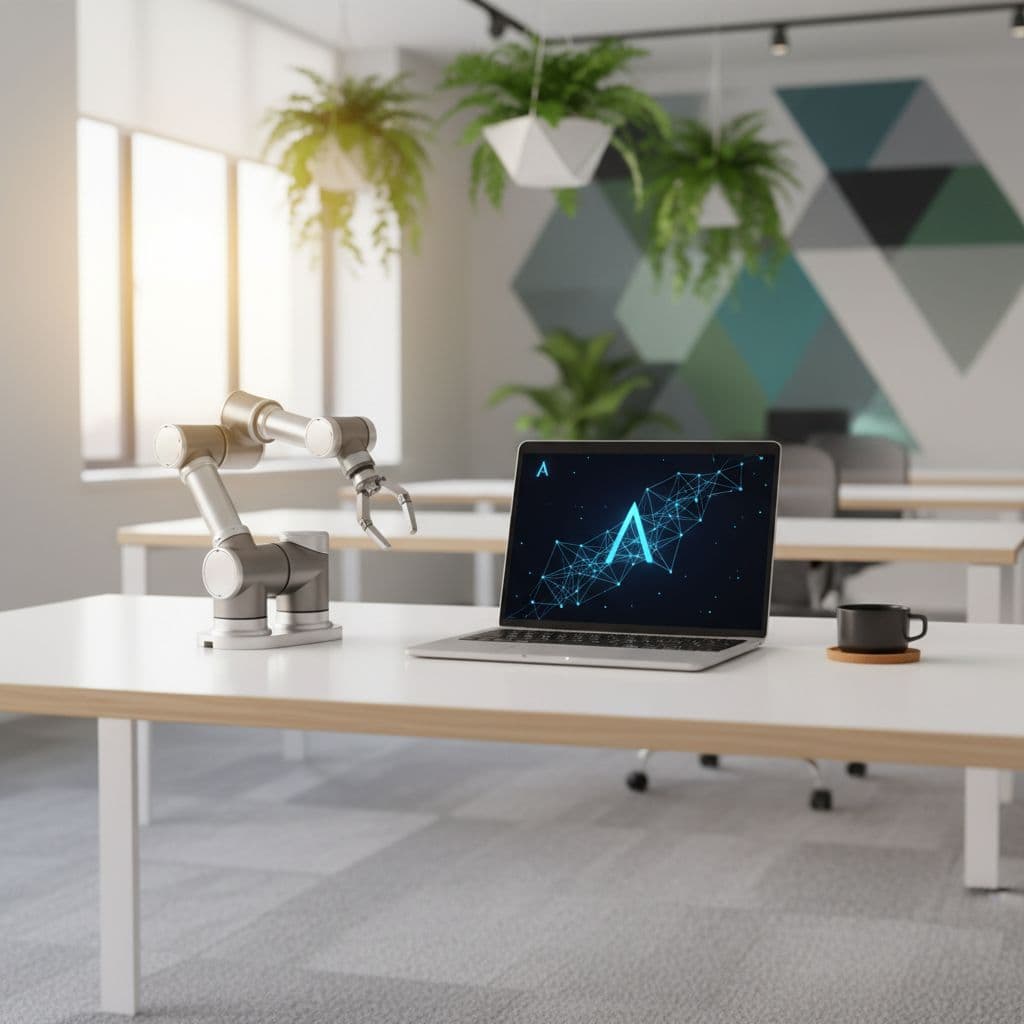
AI agents are the biggest story because action changes the value of software. A chatbot can explain a process. An agent can follow it, with approval rules, login limits, and a record of what it touched.
After a client call, for example, an agent can turn notes into a follow-up email, update the CRM, schedule the next meeting, and flag open questions. The user sets the goal, while the system handles the handoffs. Recent coverage in AI news and views shows how agentic search and AI-first interfaces are pushing this model into mainstream products. Teams aren’t asking only whether AI can answer. They’re asking whether AI can finish.
What better coding tools mean for developers
Coding tools are changing in a similar way. The best assistants now work inside safer sandboxes, propose code in smaller chunks, run tests, and explain why a change may break something. That makes them less like autocomplete and more like a junior teammate who shows work.
The win is speed with fewer blind spots. A strong tool can draft boilerplate, write unit tests, and catch common bugs before code reaches production. That matters most in busy teams with thin review time. Guardrails still matter, so smart teams keep secrets out of prompts, review generated code, and limit what assistants can run on live systems.
Voice AI is getting louder, smarter, and more natural
Voice AI is also moving past the demo stage. It used to sound stiff and pause too long. Newer systems handle live speech with better timing, which makes them feel closer to a conversation and less like a phone tree.
Real-time voice apps are becoming a new standard
That change is turning real-time voice apps into a new standard. In call centers, AI can answer routine questions, hand off tough cases, and summarize the call before the agent types a word. In the car or the kitchen, hands-free assistants can listen, reply, and act while your hands stay busy.
The gain is speed, but the bigger gain is flow. People speak in half-finished thoughts, jump back, and correct themselves. Better voice models can track that rhythm. Because replies arrive faster, agents don’t have to repeat questions or wait through robotic pauses. That improves call quality and lowers friction.
Why voice cloning is a major trend
Voice cloning is growing for the same reason. Once a system can sound natural, companies want a voice they can repeat and scale. Media firms can dub content faster. Brands can keep one familiar voice across apps. People who lose speech can recreate a version of their own voice for daily use.
Still, cloned voices raise trust problems fast. A smooth fake can fool a customer, a family member, or a bank agent. Newsrooms and podcast studios are already testing that balance. A 2026 tech trends report from CB Insights places multimodal assistants near the center of this wave, because speech works best when software can also read text, image, and context. When a voice sounds human, users need a clear way to know whose voice it is.
Robots, self-driving cars, and physical AI are leaving the lab
The next step is physical. AI is moving off screens and into machines that can pick, sort, carry, and drive. Warehouses, factory floors, and mapped city routes are the first places to watch, because the work is structured enough for software to learn and repeat.
How humanoid robots could change work
Humanoid robots draw attention because the human world already has human-sized tools. Doors, shelves, carts, and workstations all assume arms, legs, and reach. A robot with that shape can fit into existing spaces without a full redesign.
That doesn’t mean you’ll see one doing home chores next month. Early use is more likely in warehouses, factories, and back-room jobs where the task repeats and the setting stays controlled. A 2026 innovation trends roundup points to humanoid machines as one of the big bets this year. The near-term test is simple. Can they work a full shift, safely, at a cost a company can accept?
What is happening with autonomous vehicles now
Self-driving vehicles are further along in narrow lanes than in open chaos. Robo-taxi services can already handle some mapped zones, good weather, and well-trained routes. That is real progress. It is not a promise that every street is ready.
Public trust still depends on boring things, not flashy demos. Riders want clean safety records. Cities want clear rules on permits, data, and liability. Emergency crews want vehicles that know how to react when a road closes or a human officer steps in. Delivery fleets and highway pilots keep testing the same lesson. The promise is strong, yet the hard part is steady performance on bad days.
AI chips, data centers, and infrastructure are powering the race
None of this runs on magic. Every smart assistant, robot, and voice tool needs hardware, memory, networking, and power. That is why the hottest race in tech isn’t only about models. It is also about who can build enough chips, servers, and data centers to keep those models fast and affordable.

Why AI hardware is in such high demand
AI hardware is in high demand because usage has shifted. Training giant models still matters, but inference now eats up more attention. Every time a customer talks to a voice bot, asks for code help, or launches an agent, someone pays for compute.
That pressure is changing chip design. Companies want faster processors, tighter memory links, and more specialized parts for specific workloads. A JPMorganChase report on emerging technology trends notes that inference demand keeps pushing infrastructure buildout. That is why chip backlogs and cloud pricing still matter to end users, even if they never see the hardware. Users feel it as quicker replies, better uptime, and lower costs when supply catches up.
How energy needs are changing the tech world
Energy has become part of the tech story because AI systems run hot and hungry. Big clusters need serious cooling, backup power, and space near strong grid links. So the conversation has widened from chips to the full stack around them, including liquid cooling, denser server design, and smarter workloads that waste less power.
This is where growth meets restraint. Companies want bigger models and faster service, but they also want lower operating costs. Power deals and site selection now shape product road maps. Smaller job-specific models help. So does pushing some AI work closer to the device, where it can run with less delay and less power.
The pattern behind the headlines
May 2026’s biggest technology story is simple: software is learning to act in the real world. AI agents can handle parts of a workflow, voice systems can carry live conversations, robots can do more physical work, and self-driving platforms keep inching forward where roads and rules allow.
Behind all of it sits infrastructure, the chips, data centers, and power systems that decide what feels instant and what still feels slow. The headlines will keep changing, but the pattern is clear. The tools that matter most are the ones that turn useful intelligence into dependable action.