A fee cut usually means someone on Wall Street takes a hit. With SpaceX, the math works differently.
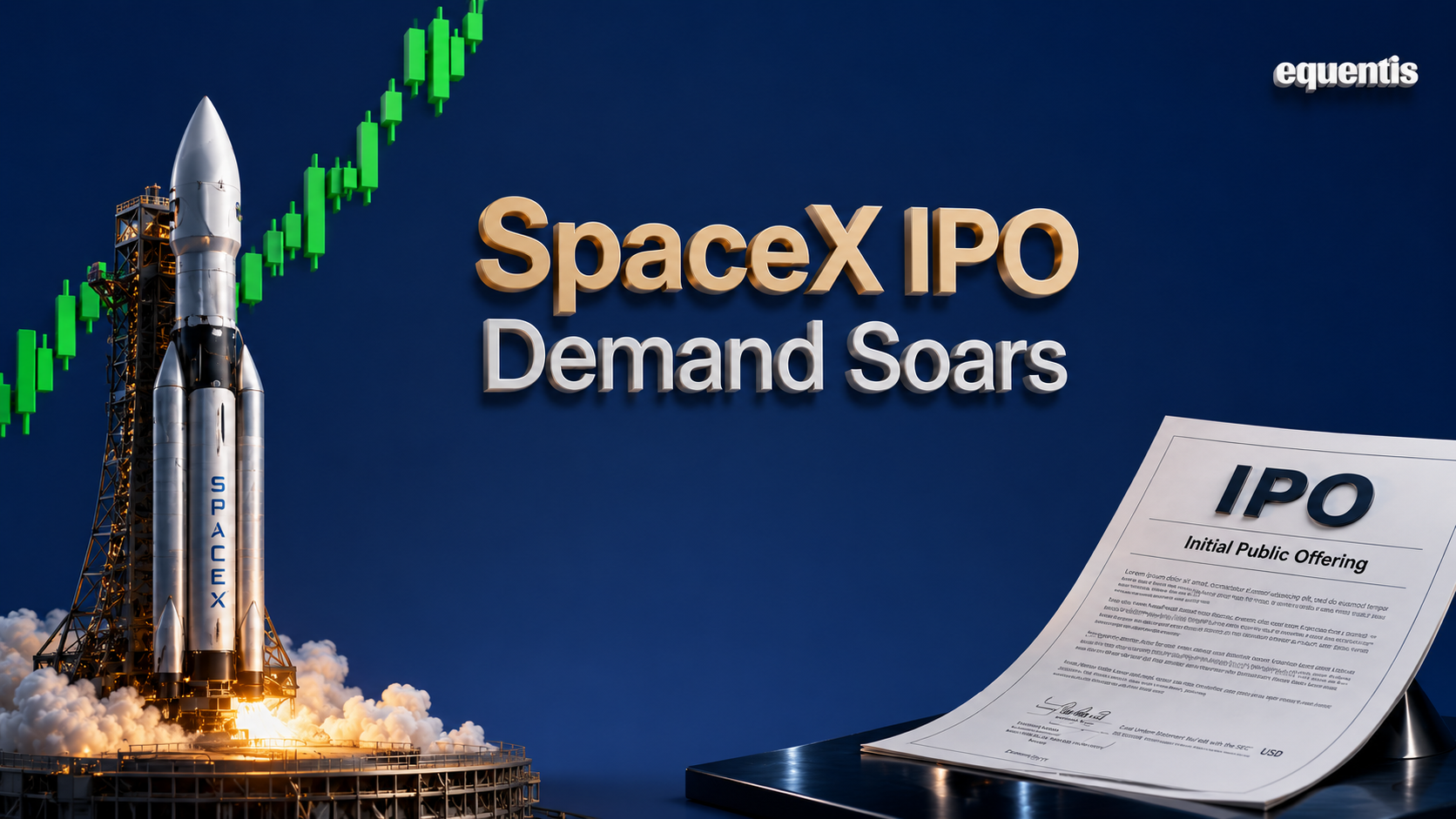
The company is said to be pushing for an IPO fee of less than 0.75% on a planned $75 billion raise. That sounds lean until you run the numbers and see why banks are still crowding in. Even at a discount, the pool could still reach about $500 million. The full Bloomberg Television discussion is available in this YouTube segment on SpaceX’s fee negotiations.
SpaceX is asking for terms few companies could get
Most companies don’t walk into an IPO process with much pricing power. SpaceX does. One comparison in the discussion cast it as the “Walmart of IPOs,” meaning the buyer has the upper hand because every major bank wants in.
That matters because normal IPO fees are much higher than what SpaceX is trying to pay. For a standard offering, often a few hundred million dollars and usually less than $1 billion, banks often charge between 4% and 7%. On giant listings, the rate drops. Still, even famous mega IPOs have usually cleared 1%.
This quick comparison shows how unusual the SpaceX ask looks:
| Deal type or example | Amount raised | Typical fee level | | | | | | Standard IPO | Usually under $1 billion | 4% to 7% | | Mega IPOs such as Facebook, Uber, Alibaba | Multibillion-dollar offerings | Usually above 1% | | General Motors in 2010 | Unusual public listing | 0.75% | | SpaceX target | $75 billion | Less than 0.75% under discussion |
The GM example is the closest point of reference mentioned, and even that came with a big asterisk. Banks agreed to a 0.75% fee in 2010 when General Motors was controlled by the US government. SpaceX is different, but the scale is just as hard to ignore.
So the fee debate isn’t about whether SpaceX can afford to pay banks. It can. The fight is about whether Elon Musk should pay a normal rate when demand to work on the deal is already overwhelming. If the company can raise more money than almost any business in market history, it can ask Wall Street for a thinner slice.
A bargain fee can still turn into a blockbuster payday
The headline number is what makes this story so sharp. A fee below 75 basis points, which is another way of saying 0.75%, sounds tiny next to old-school IPO spreads. But on $75 billion, that “tiny” fee is enormous in dollars.
At 0.75%, the fee pool would land above $560 million. Even if SpaceX gets the rate lower than that, the total still sits in the rough neighborhood of $500 million. That’s why no bank wants to be left outside the syndicate.
On a $75 billion IPO, a cheap fee still looks like a huge Wall Street check.
That also explains why there appears to be little room for banks to push back. When a company this large, this famous, and this closely tied to Elon Musk opens the door, the banks’ main risk is missing the deal, not accepting a lower fee. Prestige matters. Future business matters too. A spot on the biggest IPO in the market has value beyond the immediate revenue.
The discussion pointed to Goldman Sachs and Morgan Stanley as the lead banks, with the remaining 21 brokers taking smaller roles. One estimate floated in the conversation put the lead firms at around $100 million each, with the rest of the fee pool spread across the wider group. That breakdown has not been presented as final, but it captures why this still matters to the banks.
If Musk’s view is that investors want to hear from him, not from bankers reading slides about market size, the logic is clear. Why pay a premium for hand-holding when the demand story starts with rockets, satellites, and Mars? Wall Street may not love that logic, but the dollars are still large enough to keep the phones ringing.
Why SpaceX wants 23 banks in the first place
At first glance, 23 banks sounds excessive. A company with Musk’s name recognition might seem able to sell itself. Yet a deal of this size needs more than fame. It needs reach.
The target is massive, and so is the valuation story around it. The discussion pointed to a possible valuation around $1.8 trillion, with some earlier talk running as high as $2.2 trillion. At the same time, bankers have reportedly trimmed back some of the higher expectations. That tells you the order book still matters, even for a company with a magnetic founder.
Each bank brings a different map of investors. One example raised was Citigroup, which could help reach retail investors overseas. Bank of America could have strength with US retail demand. Then there are firms like Goldman Sachs, Morgan Stanley, and JPMorgan, which are built for the biggest institutions. Those relationships can matter when you’re trying to line up names such as BlackRock or the Saudi sovereign wealth fund, PIF.
The larger point is simple. This isn’t a typical IPO where a few roadshow stops and a polished deck are enough. A $75 billion sale needs demand from many pockets of capital, across regions and investor types. Musk may be the draw, but distribution is still the business banks know best.
That is also why the syndicate keeps growing. When a deal aims this high, every corner of the market matters. Yahoo Finance outlined the bank lineup and lead roles in its report on Goldman Sachs and Morgan Stanley’s positions in the SpaceX IPO. Behind the scenes, the work is less glamorous than a Musk pitch. It is about finding enough buyers, at the right size, at the right valuation.
The roadshow looks close, even if the itinerary is still hidden
Timing is now part of the drama. The schedule for the roadshow was described as imminent, but details were still being held close. That leaves plenty of market chatter and very few public clues.
The reported expectation in the conversation was pricing on Thursday, with trading starting the following day if the usual pattern holds. That is how many IPOs move. Still, the timeline can slip by a day or two, especially on a transaction this large.
People naturally want the roadshow map. Will the team hit Boston, London, New York, or other major money centers? That wasn’t confirmed. The lack of a published schedule doesn’t mean there isn’t one. It means the company is controlling the flow of information while it lines up demand.
The roadshow itself may look different from a conventional IPO pitch. With Musk, the founder’s story can dominate the room. Investors know the broad themes already: rockets, Starlink, defense ties, space infrastructure, and the long-term goal of reaching Mars. Bankers still matter, but more as organizers and placement agents than as the star narrators.
That creates a strange balance. On one hand, this is the kind of deal where investors may care more about Musk’s vision than a banker-led walkthrough of valuation slides. On the other hand, even a cult stock needs hard commitments when the offering is this large. CNBC has been tracking the timetable in its SpaceX IPO live updates. Between now and pricing, the key question is less about attention and more about how much real money shows up.
Google’s surprise raise adds another squeeze on investor capital
SpaceX isn’t coming to market in a vacuum. The discussion also touched on a surprise Google equity deal that stole some attention at exactly the wrong moment for anyone hoping to dominate the tape.
The details sounded complex because the raise involved multiple tranches, and that made direct comparisons harder. The headline figure mentioned was about $50 billion, with Berkshire Hathaway acting as an anchor investor. Part of that deal was said to be pricing immediately, while another piece would come later.
Why does that matter for SpaceX? Because even in a strong market, the pool of available capital is not endless. Investors don’t write giant checks in isolation. When one blockbuster deal appears right before another, demand has to be spread, budgets get tighter, and attention gets split.
That is why the broader market backdrop in this discussion felt so unusual. If both deals move as planned, the major banks involved could raise more than $100 billion in new equity in about 10 days. That is an extreme amount of issuance in a short window. The conversation also noted that OpenAI has not even entered the lineup yet, which hints that this rush may not be over.
For SpaceX, the message is clear. The company still has star power, but even star power has to compete for dollars. Musk may be able to push bankers down on fees because they need the mandate. He still needs enough investors to support a giant valuation in a market that suddenly has several very large mouths to feed.
Final thoughts
The simplest way to read this fight is through scale. SpaceX may win one of the lowest IPO fee rates on record for a deal of this size, yet Wall Street can still walk away with about $500 million.
That tension is what makes the story so compelling. Musk appears to have the power to squeeze the percentage, while the banks still have enough incentive to say yes. When the raise is $75 billion, both sides can claim a win.