A motorcycle that follows you across a parking lot used to sound like a movie prop. So did a bike that balances itself at a stoplight, or a personal aircraft that fits inside a six-wheeled truck.
Yet by 2026, those ideas are no longer far-off sketches. The most striking part is not the wild styling or the speed claims. It’s how fast self-balancing systems, electric drivetrains, and low-altitude aircraft are starting to blur the line between bike, robot, and aircraft.
Start with the motorcycles, because many of the biggest changes are already happening at street level.
Self-balancing motorcycles are moving from novelty to safety
Some of the boldest motorcycle ideas now have little to do with horsepower. They focus on the slow, awkward moments that make riding stressful, parking lots, stoplights, U-turns, and uneven pavement.
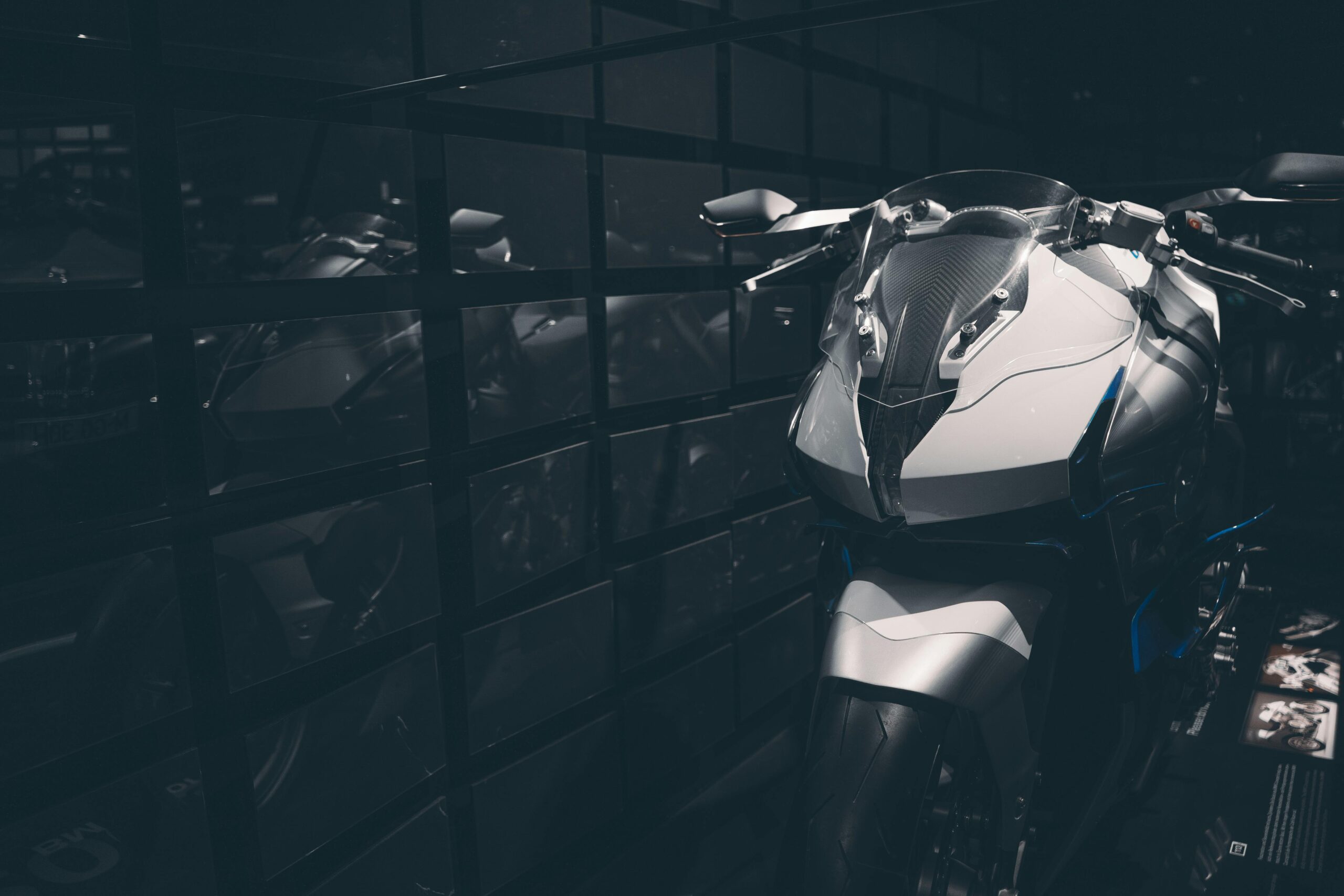
Yamaha’s Motoroid 2 pushes that idea a long way. The bike uses cameras and AI to recognize its owner, then balances itself at very low speeds. In the most attention-grabbing scenario, it can make its way through a crowded lot to meet you. Yamaha also says the machine can shift its posture to suit the rider’s body, which makes the whole concept feel closer to a responsive device than a normal motorcycle.
China’s DaVinci DC100 takes a similarly software-heavy path. More than 200 sensors track lean angle, surroundings, and the bike’s behavior in real time. Its electric system can produce up to 135 horsepower, but the bigger point is how the onboard computer controls power delivery so the bike stays planted. For riders who find large motorcycles intimidating, that matters more than a spec-sheet brag.
Honda Riding Assist looks even closer to daily use. Built with ideas borrowed from Honda’s ASIMO robotics program, it keeps itself upright below about 3 mph. At those speeds, the front forks disengage from the handlebars, the wheelbase extends, and the bike makes tiny steering corrections every second to stay vertical.
For many riders, that is the real leap. Low-speed drops are common, expensive, and embarrassing. The same themes appear in a new motorcycle advancement roundup, where rider aids, lighter materials, and electric power keep showing up together.
Software is turning balance from a rider skill into a built-in feature.
Electric speed and new layouts are redefining the motorcycle
If the first wave is about confidence, the next wave is about shape. Electric power lets engineers move motors, batteries, and drivetrains into places gas bikes never could.
The Voxan Wattman makes that point with brute force. The French brand, revived under the Venturi Group, built an electric machine with 150 kW, or 203 horsepower. In 2022, at the Kennedy Space Center, it reached about 283 mph and broke 21 world records. That number is startling on its own, but it also shows how far electric performance has moved past the old idea that battery power only works for short, quiet commuting.
Lit Motors goes in a different direction with the C-1. This is an enclosed, two-seat electric vehicle that still rides on two wheels. Under the floor, two heavy gyroscopes spin at high speed to keep it upright. The company says a hard side impact from a passenger car should not knock it over like a normal motorcycle. Add a carbon-fiber shell, a 100 mph top speed, and a 124-mile range, and the C-1 looks like a motorcycle that learned a few tricks from a city car.
Austria’s Johammer J1.200 strips away even more of the old formula. Its electric motor sits directly in the rear wheel hub, which removes the need for a chain, belt, or external transmission. That means less mechanical friction, less maintenance, and a ride quiet enough to sound eerie. The bike pairs that setup with a 12.7 kWh battery, up to 124 miles of range, recharge times as short as 40 minutes, and bidirectional power that can run tools or appliances.
The machines are getting easier to build than the rules are to write. In the US, a vehicle’s label affects licensing, insurance, and where it can legally operate. Once a two-wheeler has an enclosed cabin or self-balancing software, that line gets blurry. The same push showed up at CES 2026 in a CES 2026 motorcycle tech report focused on making high performance easier to handle.
Flying motorcycles split into practical experiments and pure spectacle
Some companies stop at self-balance. Others ask a harder question: if a two-wheeler is light enough and electrically driven, why keep it on the ground at all?
Xpeng AeroHT answers with a flying motorcycle concept built mostly from carbon-fiber composites. The machine is described at 176 pounds and uses electric rotors for vertical takeoff and landing instead of a normal mechanical drive system. Its battery pack is said to support about 17 minutes of flight, with hovering height around 10 feet. Those numbers won’t replace a car trip, but they do show what happens when a company treats short-hop personal flight as a battery and weight problem first.
That approach also reflects a broader split in how companies chase future transport. American firms often put more energy into software, autonomy, and sensing. Chinese manufacturers, meanwhile, have moved fast in batteries, hub motors, and large-scale electric vehicle production. When flight time is limited by battery weight, that hardware advantage matters.
France’s Lazareth LMV 496 goes in the opposite direction. On the road, it runs a 470-horsepower Maserati V8. Press one button and the four wheels fold outward, turning the vehicle into a turbine-powered vertical flight machine. Each wheel hub contains a jet turbine, and the vehicle can rise about 6 feet off the ground. At more than $500,000, it is not a commuter.
Put side by side, these machines point to two separate futures. One is a light electric aircraft that borrows motorcycle proportions. The other is a luxury mechanical showpiece built to prove a point. Both are unforgettable, but only one feels close to practical use.
Personal flying vehicles are already taking several forms
Once the classic motorcycle shape starts to break apart, personal flight opens into a much wider field. Some machines want to be simple air commuters. Others want to make the pilot feel like the aircraft itself.
The Xpeng AeroHT Land Aircraft Carrier may be the cleanest example of that practical thinking. It combines a six-wheeled electric ground vehicle with a two-seat electric aircraft stored in the rear cargo bay. You drive to an open area, deploy the aircraft, and separate road travel from air travel instead of forcing a single machine to do both. That avoids the weight and design penalties that come with building one vehicle for two jobs.
EHang’s 216-S takes the opposite route and removes the pilot altogether. The two-seat eVTOL has eight folding arms and 16 rotors, but there are no standard flight controls in the cabin. Passengers enter a destination on a screen while a ground command center manages the trip. Its official type certification for commercial passenger use gives it more weight than most futuristic prototypes.
Gravity Industries keeps the person at the center. Its Jet Suit uses five compact jet engines, two on each arm and one on the back, to create more than 1,000 horsepower. The pilot changes direction by moving arms and shifting body weight. Speeds can reach about 53 mph, and altitude can climb close to 12,000 feet, although flight time stays near 10 minutes because the fuel burns fast.
Jetson ONE falls between those extremes. The single-seat aircraft weighs about 190 pounds, uses eight electric motors, and can reach 63 mph. A joystick handles the basics, while onboard AI manages hover and stability. That reduced workload is why it is pitched as something people can operate without a formal pilot license.
The limit across all four machines is still energy. Battery aircraft stay within short-hop missions. Small jet systems drink fuel quickly. So the key design choice right now is simple: more automation, or more human control.
Air taxis, racing craft, and hybrid aircraft show where this may go next
The bigger aircraft in this group show how the market may divide over time. Some aim at urban trips, some at sport, and some at regional travel that skips highway traffic and airport lines.
AutoFlight’s Prosperity makes the strongest case for electric air taxi range. It set a record with a 155-mile flight on a single charge, which moves this class beyond short demo hops. Safety is central to the package. Ballistic parachutes and multi-sensor collision systems are built to react when a major problem appears, either by lowering the aircraft safely or deploying a last-resort parachute.
Airspeeder Mk3 turns the sky into a race track. The uncrewed electric craft can hit 186 mph and uses a carbon-fiber structure with an octocopter layout. Racing may sound separate from everyday transport, but it has a practical side. High-speed competition is a brutal test for sensors, remote piloting, and collision avoidance, the same tools passenger aircraft will need.
Pivotal Helix brings the idea back to a more personal scale. It is a 254-pound electric ultralight with a fixed wing and eight tilted rotors. Because the software handles takeoff, landing, and stabilization, it is designed for recreational flying without a private pilot license. Learning time is measured in hours, not months.
There is also a quieter piece of this story. In parts of Asia, cargo drone networks already move food and drinks to neighborhood pickup stations. That daily traffic could help build the routing, control, and airspace habits needed before larger passenger vehicles arrive in big numbers.
At the high end, the XTI TriFan 600 looks like a bridge between helicopter freedom and private jet speed. Its three ducted fans let it lift off vertically, then transition to forward flight at about 380 mph. With room for six passengers, a ceiling near 30,000 feet, and a range close to 1,500 miles, it points toward regional travel where the airport is no longer required for every trip.
Final thoughts
Looking up from a traffic jam still won’t put you into a turbine-powered bike tomorrow. But the change is already visible in smaller, more useful ways. Motorcycles are learning to stay upright on their own, aircraft are lowering the skill needed to fly, and electric layouts are forcing old vehicle categories to bend.
The strongest pattern across all 16 machines is control. The vehicle now does more of the balancing, correcting, and decision-making that once belonged only to the rider or pilot. The road is not disappearing, and the sky is not open to everyone yet, but personal transport is clearly moving toward machines that act less like tools and more like partners.