SpaceX’s public debut has been framed as the biggest IPO ever, a roughly $75 billion raise for a company valued near $1.75 trillion to $2 trillion. That number is hard to ignore. So is the other one: SpaceX is still losing billions of dollars a year.
That tension is why investors are split. Some see a company that changed rocketry, built a fast-growing satellite network, and might own a big piece of AI infrastructure next. Others see a market paying today for businesses that do not work at scale yet.
To understand what is wrong with the SpaceX IPO, you have to stop staring at the launch footage and follow one small figure, $200 per kilogram. If SpaceX reaches that cost, the whole story changes. If it misses, much of the valuation starts to look like a very expensive promise.
Why the SpaceX IPO has investors so divided
The scale of the deal set the tone before anyone even argued about the business. Saudi Aramco raised $29.4 billion and held the modern IPO record for years. SpaceX blew past that mark in one shot. Size like that creates awe, but it also creates suspicion, because attention and value are not the same thing.
A record-breaking raise built on giant expectations
At a reported share price of $135, SpaceX entered public markets with numbers that would make almost any company look untouchable. The basic math behind the offering, including the implied valuation and offering size, is laid out in these SpaceX IPO fixed share price details.
The raise matters because it tells you how strongly markets believe in the next chapter, not because it proves the next chapter exists. SpaceX is not a mature cash machine like Aramco. It is a company with a famous operating business, heavy capital needs, and a valuation built on future economics that still need to be proven.
That is the first crack in the story. A giant IPO can confirm demand for shares. It cannot confirm that the business deserves the price.
Why the market sees both a miracle and a bubble
The bull case is easy to understand. SpaceX already did what older aerospace giants could not do for years. It cut launch costs, won NASA and Pentagon work, and built Starlink into a real business with global reach. People who buy that story think this is another Amazon in 1997, expensive, hard to value, and far earlier than most investors are comfortable with.
The bear case is just as clear. SpaceX loses money on launches, spends heavily on Starship, and folds an expensive AI story into an already demanding valuation. That makes the IPO feel less like a clean public listing and more like a bundle of huge future bets.
So when people ask what is wrong with the SpaceX IPO, the answer starts here: the price asks investors to believe several hard things will all happen on schedule.
The $200 per kilogram number at the center of the SpaceX story
Everything in this IPO comes back to launch cost. Rockets are not only a product for SpaceX, they are the toll road for every larger idea attached to the company.
If Starship can push launch costs toward $200 per kilogram, the economics of many off-Earth businesses improve at once. If that number stays far higher, the bull case loses its backbone.
How SpaceX cut rocket costs before Starship
When Elon Musk started SpaceX in 2002 with about $100 million of his PayPal money, the old launch model looked wasteful. A single launch could cost $50 million to $400 million, even though the raw materials in a rocket were only a small slice of the price.
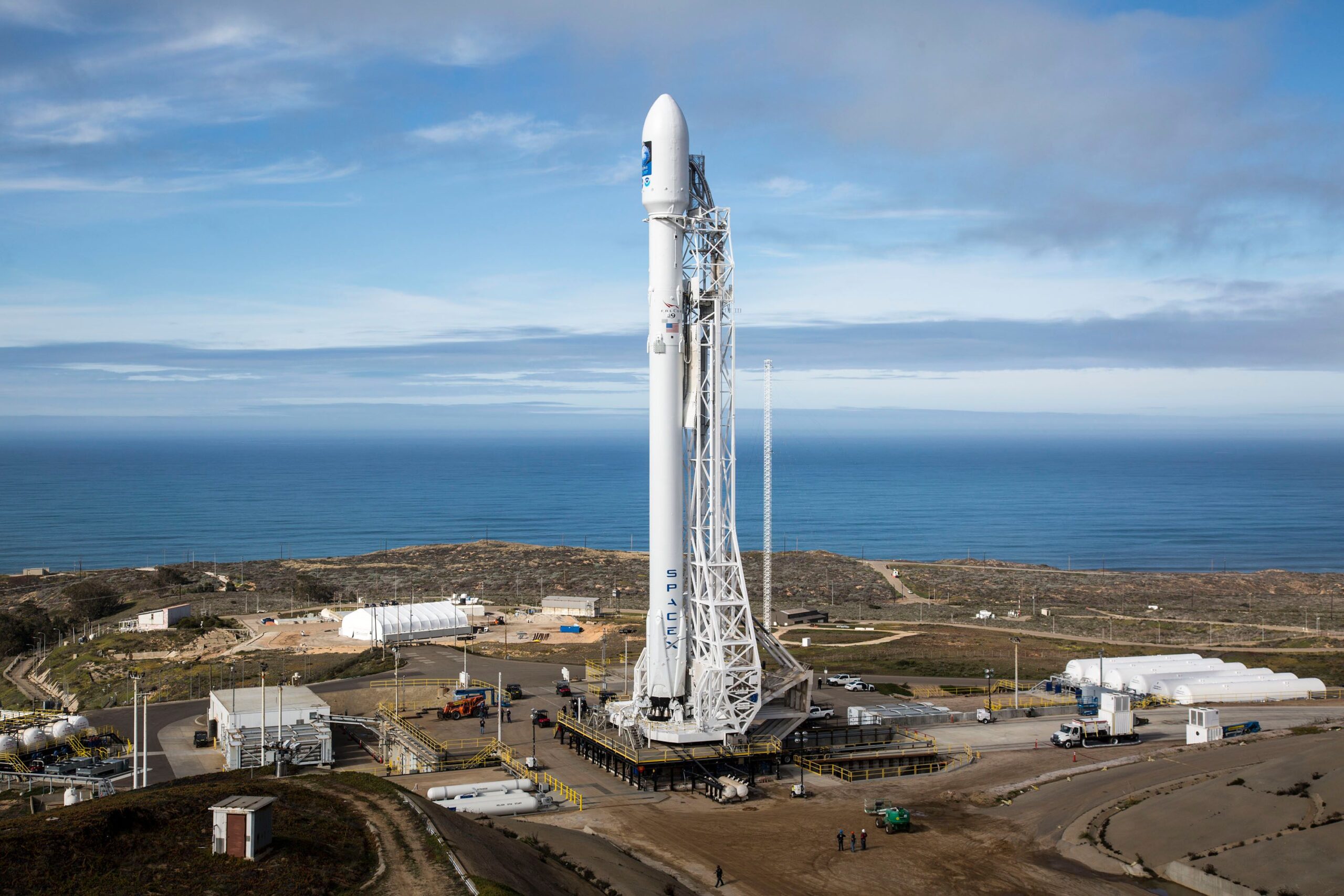
The real cost sat in the parts that got thrown away. A traditional rocket burned through its first stage, lost the fairing, and built a new stack for the next mission. SpaceX changed that with Falcon 9. Its first stage returns and lands. Its fairings can be recovered and flown again. Only the second stage is still lost on each mission because it must continue into orbit.
That one change drove launch costs sharply lower. The figures cited around the IPO compare older launch economics with Falcon 9 and Starship’s target.
| System | Cost per kilogram | Reuse level |
|---|---|---|
| Older launch model | About $18,500 | Little to none |
| Falcon 9 | About $2,700 | First stage and fairings reused |
| Starship target | About $200 | Full, rapid reuse target |
That is why Falcon 9 mattered so much. It did not make space cheap, but it made space much less expensive than it used to be.
Why Starship is supposed to make space much cheaper
Falcon 9 still throws away the second stage, which means even a reusable rocket loses a meaningful chunk of itself on every flight. Starship tries to erase that last waste. The booster is designed to return and get caught by the launch tower. The ship on top is also meant to return, refill, and fly again.
That is a much bigger leap than people sometimes realize. SpaceX says Starship can carry about six times the cargo of Falcon 9. It also runs on methane, with recurring fuel costs estimated around $1 million to $2 million per launch. If the hardware keeps flying, the cost structure changes fast.
This is the logic behind the claim that launch cost could fall from roughly $100 million per mission to about $10 million, and that cost per kilogram could move toward $200. The whole valuation story depends on whether Starship becomes a reliable flying machine rather than a spectacular prototype.
What happens if the $200 target never arrives
If Starship stalls far above that goal, many of the bigger ideas around SpaceX start to wobble. The most important one is orbital computing.
The case for space-based data centers starts with a real problem on Earth. AI data centers consume huge amounts of power and water. The numbers cited around the IPO say a large center can use as much electricity as 100,000 households, while evaporative cooling for 1 megawatt can require 5,000 to 9,000 gallons of water a day. Space offers stronger solar exposure and endless sunlight windows, but it creates another problem. Cooling in a vacuum is hard.
Heat in space does not drift away through air or water, because there is no air or water. It has to radiate out through large radiator systems. The International Space Station reportedly produces about 70 kilowatts of heat and needs about 7,000 kilograms of radiators. Scale that to 1 megawatt and radiator mass becomes enormous.
At Falcon 9 economics, orbital data centers stay costly. The numbers cited in the case put Earth data centers at about $12 million to $15 million per megawatt, versus roughly $32 million in space using Falcon 9 launch pricing. At $200 per kilogram, the space number falls enough to look far more competitive over a full operating life. So if Starship misses, the orbital compute thesis weakens fast.
SpaceX is not one business, it is three businesses tied together
Most people still picture SpaceX as a launch company. The IPO story is much broader than that. It combines rockets, satellite internet, and an AI-compute ambition into one stacked business model.
The rocket business is paying for the next leap
The launch division is prestigious, but it is not the simple profit engine many people assume. In the figures cited around the IPO, the rocket business generated about $4 billion in 2025 revenue and still posted an operating loss because about $3 billion went into Starship.
That matters because the launch unit is doing two jobs at once. It sells services today, and it funds the engineering needed for tomorrow’s business model. When investors pay a premium for SpaceX, they are not buying launch revenue alone. They are paying for the chance that Starship changes the price of access to orbit.
Why Starlink matters more than the rockets right now
Starlink is the piece that makes the broader structure look believable. The network has more than 8,400 satellites, according to the figures cited in the IPO debate, and the analysis puts its margin at about 63%. That is an eye-catching number for any telecom-style business.
The reason this matters is simple. SpaceX can carry losses in other units because Starlink throws off real cash. The launch division needs capital. The AI story needs capital. Starlink is the business that helps pay the bills.
This is also why the market gives Starlink so much weight in the total valuation. A profitable internet network with global reach is far easier to value than a future orbital computing platform.
How AI and orbital data centers fit into the plan
The most ambitious layer of the story is the AI stack. By the time of the IPO, SpaceX’s narrative had widened to include xAI and X, plus a future where compute, distribution, and launch all sit in the same ecosystem. On the revenue figures cited, xAI was valued at a much richer multiple than OpenAI or Anthropic, which already made that part of the story look stretched.
Still, the business logic is not random. AI needs massive compute. Compute needs chips, power, cooling, and land. SpaceX’s bet is that once launch becomes cheap enough, orbit can solve some of those bottlenecks. The story also pulls in a huge Texas compute buildout, referred to as “Terafab” in the discussion, which is another sign that this IPO is tied to much more than rockets.
That integrated pitch is why bulls get excited. It is also why skeptics get nervous. A structure this ambitious can look brilliant right before it looks fragile.
The biggest red flags hiding inside the SpaceX IPO
SpaceX has earned the right to dream big. It has also earned closer scrutiny because the public valuation is huge, the losses are real, and several parts of the story remain unproven.
A huge market size claim does not prove success
The IPO materials cited in the analysis point to a total addressable market of about $28 trillion, much of it tied to AI. Numbers like that sound impressive, but a market can be enormous and still remain unreachable for years.
This is where valuation discipline matters. A strong business can still be an expensive stock. That is the central point in this Morningstar analysis of SpaceX valuation, which argues that the company may be exceptional while the IPO price still runs far ahead of fair value.
Unproven space infrastructure could slow everything down
The physics case for orbital computing is not the same as the business case. Nobody has deployed massive radiator systems for space data centers at industrial scale. Nobody has proven that full, rapid Starship reuse will work often enough to support a $200 per kilogram launch cost.
There is also a timing issue. Morningstar’s investor note on the IPO treats the company as overvalued at the rumored IPO range, which shows how much optimism is already baked into the price. Meanwhile, Al Jazeera’s report on Musk’s IPO risks points to a New York Times analysis claiming only 19% of roughly 600 Musk commitments were met on time, if at all. That history does not kill the vision, but it does make timing promises harder to trust.
The whole model leans on Starlink staying strong
The bull case asks Starlink to carry a lot of weight. The rocket business burns cash because of Starship. The AI side also burns cash. The figures cited in the analysis say xAI burns about $4 for every $1 of revenue and racks up billions in losses.
That would be less worrying if Starlink had no credible challengers. But Amazon’s Kuiper project and other constellations will push on pricing and margins. If Starlink’s profitability drops, the rest of the machine loses its easiest funding source.
Why the retail allocation raises eyebrows
One more detail unsettled some investors. About 20% of the IPO reportedly went to retail buyers, far above what large offerings usually hand to the public.
That can be read in two ways. The generous view is that Elon Musk wanted regular investors to share the upside. The colder view is that SpaceX used peak public excitement to place a big block of stock at a rich price. Neither reading is certain, but the size of the retail slice adds to the sense that this deal was structured as much around demand as around fundamentals.
So, what is wrong with the SpaceX IPO story?
The answer is not that SpaceX is fake or weak. It is one of the most important engineering companies of the last two decades. Falcon 9 is real. Starlink is real. NASA and the Pentagon trust the company for missions that matter.
The problem is the public price asks investors to pay now for the next leap, and the next leap is much harder than the last one. Full Starship reuse is not proven at the required scale. Orbital data centers are still a concept with ugly cooling math. The AI layer carries rich multiples and heavy burn. The Texas compute buildout tied to the story must also arrive without turning into another delayed mega-project.
So when people ask, “What’s wrong with SpaceX’s IPO?”, the cleanest answer is this: the valuation depends less on today’s business than on a chain of future wins that all need to line up. The key number is still $200 per kilogram. If that cost arrives, the IPO may look early. If it does not, the offering may end up as one of the most expensive acts of faith public markets have ever financed.
Final thoughts
The strange power of the SpaceX IPO is that both sides have a real case. Bulls can point to a company that already changed launch economics once. Bears can point to a stock price that assumes SpaceX will do it again, then turn that edge into internet dominance, AI scale, and space-based computing.
That is why the whole story keeps narrowing back to $200 per kilogram. One small number holds up a giant public valuation. If SpaceX reaches it, the market may look smart. If it stays far above it, the IPO will look like a breathtaking promise sold years too soon.