SpaceX is sketching a future where data centers leave Earth, rockets fly back and forth like aircraft, and the moon helps launch industry into deep space. Those SpaceX plans sound wild at first, but the logic behind them is surprisingly concrete.
The thread running through all of it is energy. If civilization wants more power, more compute, and a path beyond Earth, the bottlenecks are clear: launch mass, cooling, chip output, and where all that hardware can live. Start with the biggest idea, and the rest falls into place.
Why the SpaceX plans start with the Kardashev scale
SpaceX framed the whole discussion around the Kardashev scale, which measures how advanced a civilization is by how much energy it can use. It is a blunt tool, but that is part of its appeal. You do not need politics, culture, or GDP to compare civilizations. You ask one question: how much power can they harness?
That point matters because it shifts the goal from “more rockets” to “more usable energy.” Rockets are only one piece. AI satellites, solar arrays, radiators, chip factories, and lunar industry all sit inside the same argument.
What a type 1, type 2, and type 3 civilization means
A simple way to picture it is this:
| Type | Energy source | Plain-English picture |
|---|---|---|
| Type 1 | Planet | Uses a meaningful share of the energy available on its home world |
| Type 2 | Star | Uses a meaningful share of the power from its star |
| Type 3 | Galaxy | Uses energy at the scale of an entire galaxy |
By that scale, humanity is still near the bottom. The discussion argued that we are using only a tiny fraction of what is available on Earth, and almost none of the sun’s full output. Musk also used a useful reminder about scale: the sun holds about 99.86% of the mass in the solar system. Earth, by comparison, is a speck.
If a civilization wants a meaningful share of the sun’s energy, Earth alone won’t get it there.
The target mentioned was not even close to a full Type 2 civilization. It was more modest, at least by cosmic standards: reach something like one-millionth of the sun’s output. Even that would put humanity far above where it is now.
Why Earth is a weak place to scale energy
Earth has sunlight, but it also has limits. About 70% of the planet is water. A large share of the remaining land is not easy to use for giant solar systems because of climate, latitude, terrain, or distance. The poles do not get strong, steady solar input, and dense human use competes for land in the places that do.
Cooling is another problem. On Earth, big power systems and data centers need space, infrastructure, and a lot of effort to move heat away. In orbit, waste heat can radiate into vacuum. That changes the math.
The discussion made the case in simple terms: if you want to move up the Kardashev scale, you have to go to space. Staying on the ground keeps civilization pinned to small numbers. Going off-planet opens the door to far more solar collection, far more cooling area, and far more room to build.
How Starship changes the math for SpaceX plans
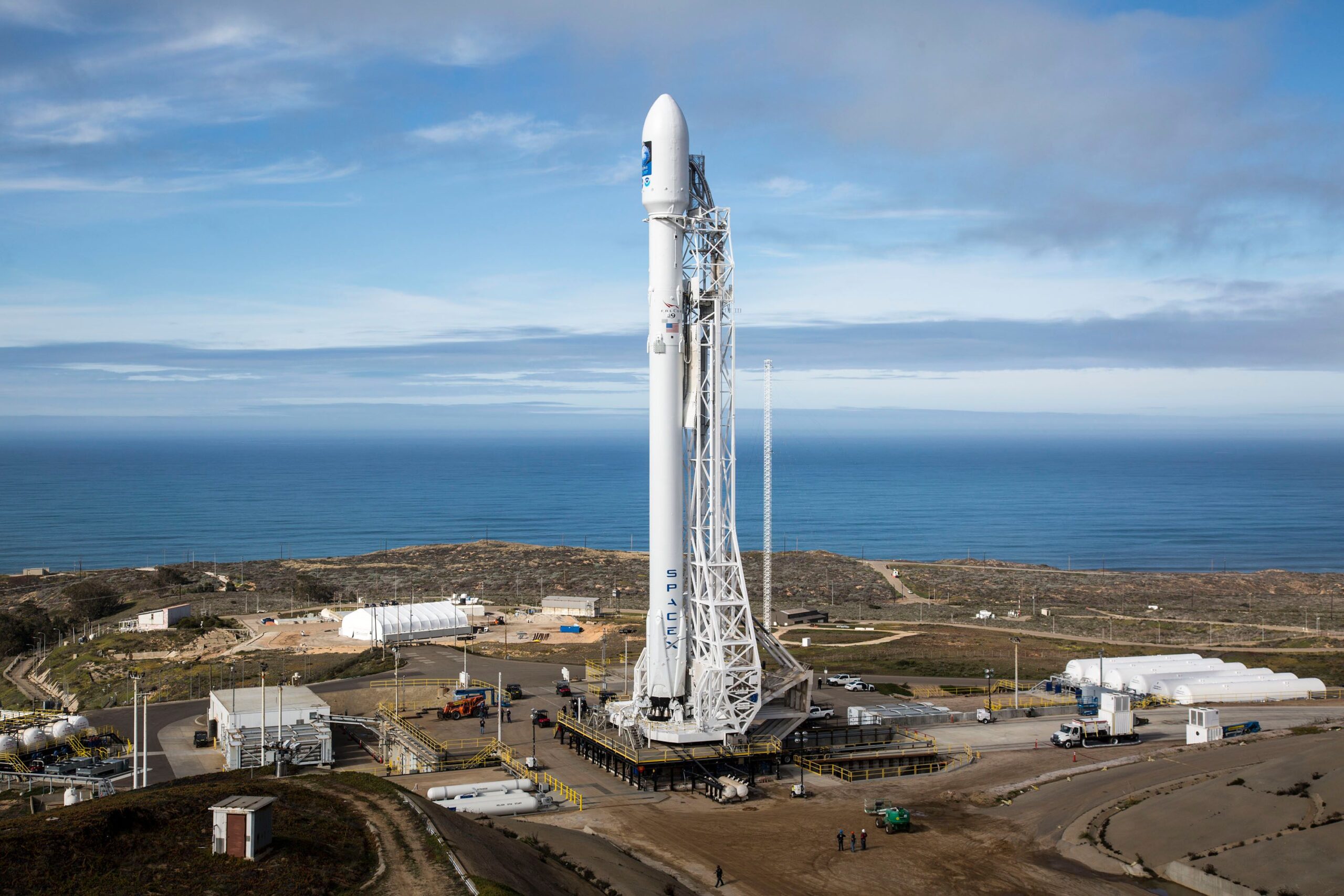
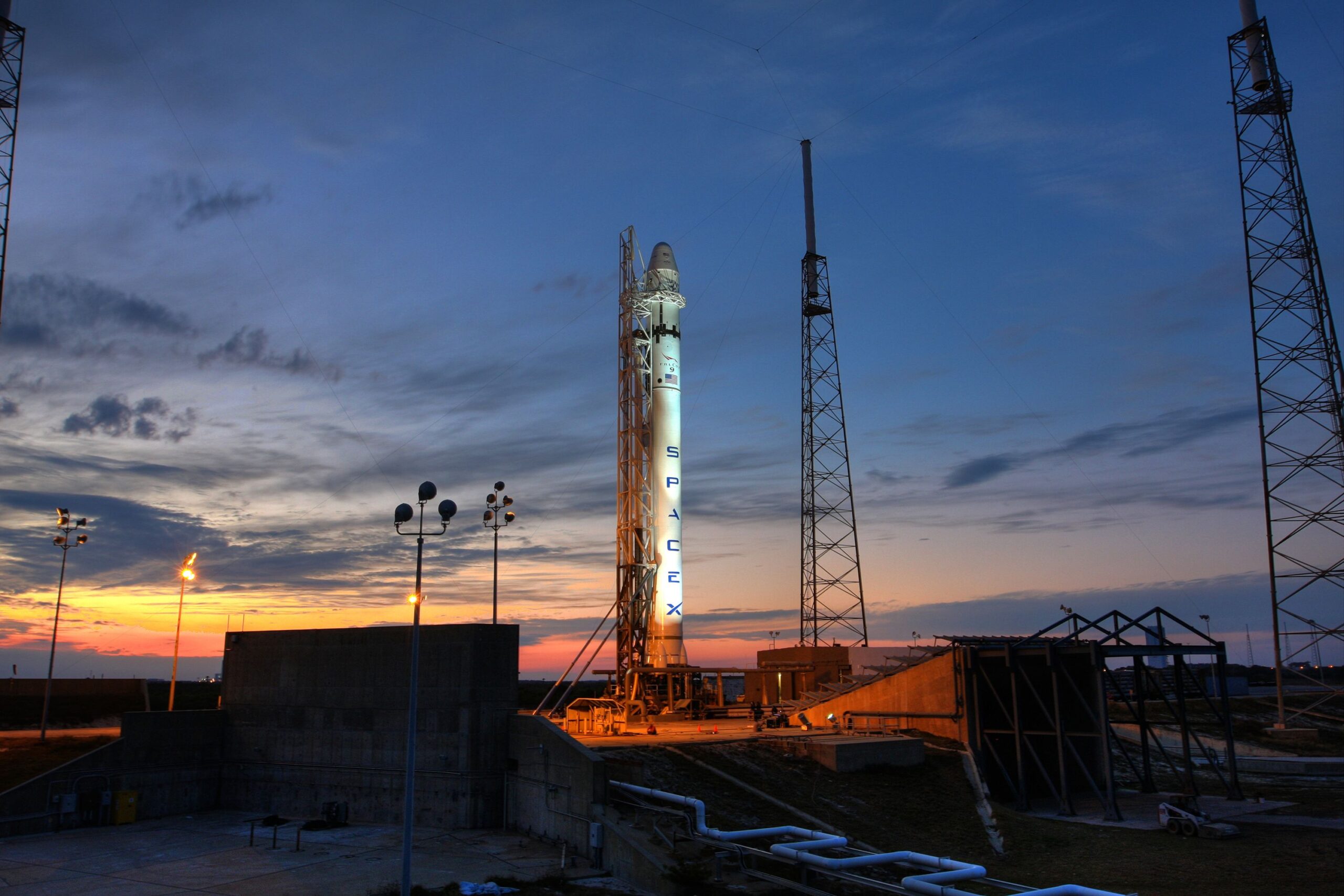
All the big talk about orbital compute falls apart without one thing: the ability to move huge amounts of hardware to orbit at low cost. That is where Starship comes in.
The point is not only that Starship is large. The point is that it is supposed to be fully and rapidly reusable. SpaceX described that as the breakthrough that makes moon bases, Mars settlement, and large-scale orbital industry possible in the first place.
Why rapid reusability matters more than raw size
A throwaway rocket keeps space expensive. Every flight burns through machines, materials, and labor. That is why aircraft are the better comparison. If every commercial flight ended with the plane being scrapped, almost nobody would fly.
SpaceX wants Starship to land, get caught by the tower, return to the pad, and fly again without heavy refurbishment. That is a far harder goal than simply building a stronger rocket. Engines, structure, avionics, propellants, and heat protection all have to work together, every time.
If you want more context on the engine side of that challenge, how Starship engines function gives a useful look at why reuse depends on propulsion as much as size.
Mass to orbit, the bottleneck Starship is built to crush
Current launch capacity is not enough for the scale being discussed. SpaceX said it already puts roughly 85% to 90% of all mass to orbit into space with Falcon 9 and Falcon Heavy. Even so, the global baseline is still small.
The jump they described is stark: from about 2,500 tons per year to orbit today, toward millions of tons per year with Starship. The rough goal mentioned was one million tons to orbit per year within about three years.
That is why Starship matters beyond headlines. AI satellites, orbital power, lunar cargo, and later deep-space industry all need enormous mass in orbit. Without that, every other part of the plan stays on paper.
Why tower catch and fast turnaround are such a big deal
Starship’s tower catch can look like theater, but it solves a real weight problem. Landing legs are heavy. Catching the vehicle with the launch tower cuts that mass and supports fast reuse.
SpaceX also stressed cadence. Starship V3 already has more than double the thrust of the Saturn V, and V4 is expected to approach three times that level. Yet thrust alone is not the long-term story. The company expects a future where Starship could fly more than once per hour.
That is the real shift. High thrust gets attention. High flight rate changes the economics of space.
Orbital AI satellites, the next step in the SpaceX plans
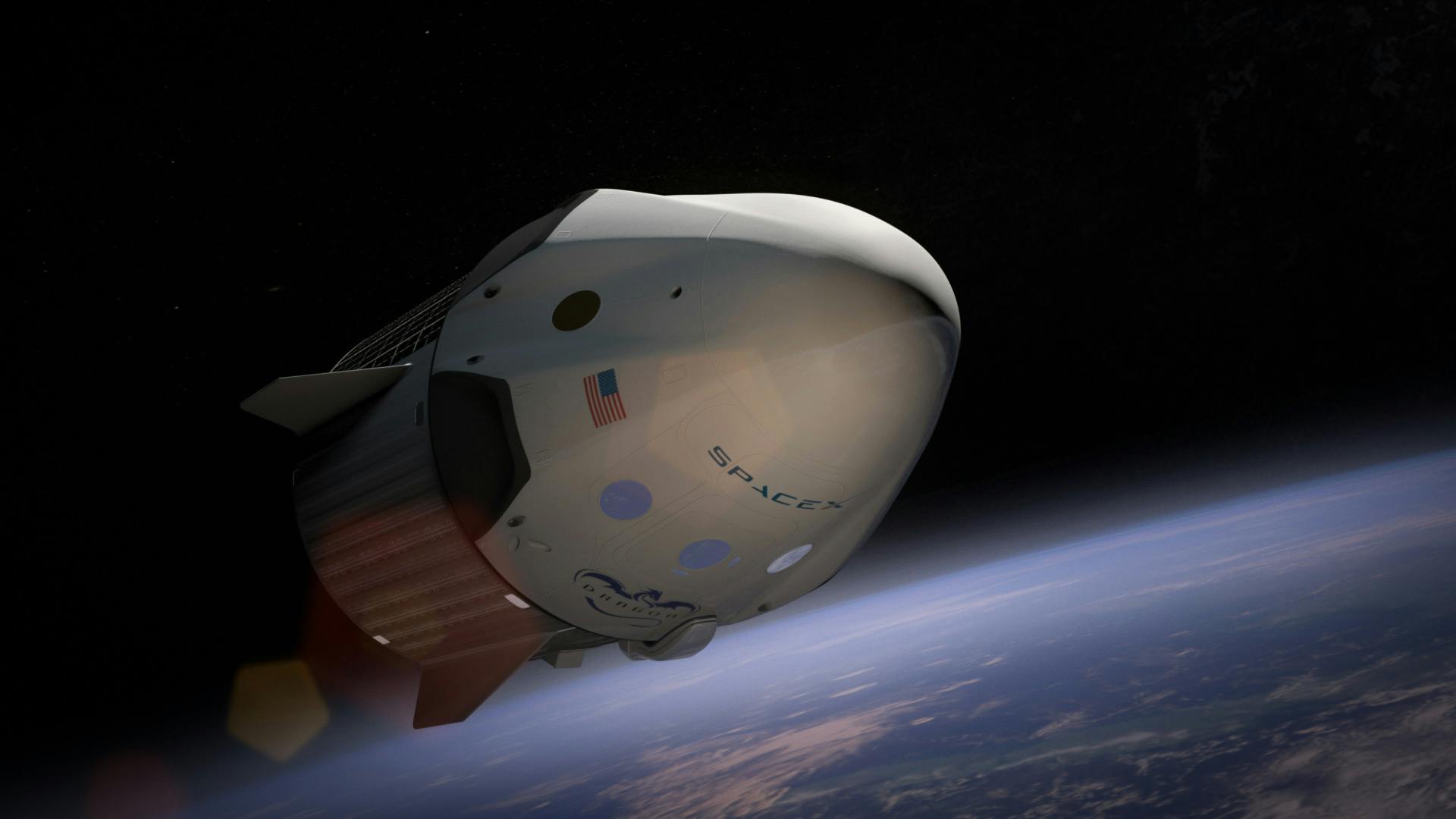
Once launch capacity rises, the next idea is to move compute off Earth. The concept is not a flying office park. It is closer to a rack of high-power AI hardware wrapped in solar arrays, radiators, and optical links.
SpaceX described the first version as an AI satellite with about 150 kW peak power and around 120 kW sustained compute. That is roughly in the range of a modern Nvidia GB300 rack. In other words, the first step is not a giant city in orbit. It is one compute rack at a time.
What makes an AI satellite different from Starlink
An AI satellite is simpler than a Starlink satellite in a key way. Starlink needs heavy communications gear, including phased-array antennas, parabolic antennas, and multiple laser links. An AI satellite mostly needs power, cooling, chips, and connectivity.
The rough design discussed used solar arrays at about 250 watts per square meter and radiators at about 1,400 watts per square meter. Those radiator panels would radiate from both sides and sit knife-edge to the sun. SpaceX said those numbers are reachable with tech it is already building around Starlink V3.
That is why the concept does not start from zero. The solar work, manufacturing base, and constellation operations already exist. A separate look at space-based data centers and orbital compute shows why this idea is pulling attention well beyond rocket fans.
How space solves the cooling problem
Heat is the hidden enemy in compute. Every watt that goes into AI hardware turns into heat that has to go somewhere. On Earth, cooling takes buildings, water systems, fans, pipes, and huge energy overhead.
In orbit, the setup changes. The satellite still has to move heat away from the chips, but then it can radiate that heat into space. That is why the discussion kept returning to radiators. Solar arrays feed the system, and radiators keep it alive.
The visual image is simple: broad wings for power, broad surfaces for heat, and a compact compute core in the middle.
Why latency may be lower than people expect
One of the first objections to orbital compute is delay. SpaceX pushed back on that point. At an altitude of roughly 600 to 800 kilometers, light travel time is small. Since light moves about 300 kilometers per millisecond, the distance is only a few milliseconds away.
That does not make orbit faster than everything on Earth, but it does make it much more practical than many people assume. The satellite can also link into the Starlink network and send data down using existing Ka and Ku communications paths, while laser links tie satellites together in space.
SpaceX also said it already operates about 10,000 Starlink satellites. That matters because running a huge constellation safely is its own hard problem.
The chip and power problem behind orbital data centers
Launching one rack is interesting. Launching enough compute to matter is an industrial problem.
SpaceX said the first orbital systems can use chips that already exist, including Nvidia GB300 or Rubin-class hardware, plus TPU-style designs. That gets the project started. It does not get it to a terawatt.
Why current chips can launch first, but cannot scale alone
The discussion argued that the current chip industry may grow to around 100 gigawatts per year of AI compute. Even if that happens, it still leaves a gap between today’s supply and the scale needed for giant orbital buildouts.
That is why the early phase sounds manageable while the later phase sounds extreme. You can launch existing chips first. After that, chip output itself becomes the bottleneck.
The same pattern shows up across the whole plan. Starship fixes mass to orbit. Solar arrays fix power collection. Radiators fix heat. Then chips become the scarce item.
What the terafab is meant to solve
To push past that limit, SpaceX described a giant chip factory called the terafab. The number attached to it was huge: about 100 million square feet, or roughly ten times the size of Tesla’s Texas gigafactory.
The point was not some mysterious new chip process. The point was scale. Even with today’s broad direction in chipmaking, the argument was that a much larger factory footprint could push output toward a terawatt of chips per year.
Musk described that in simple manufacturing terms: massive logic die output, full-reticle-equivalent chips, and a matching flood of memory.
How solar arrays, radiators, and compute have to grow together
This plan only works if three curves rise together. More chips without more power does nothing. More power without cooling cooks the system. More radiators without launch capacity keeps the hardware on the ground.
That is why the timeline was framed as a chain, not a single breakthrough. The rough target mentioned was an annualized rate of 1 gigawatt of space AI compute by the end of next year, then 10 gigawatts in about two and a half years, then 100 gigawatts in about three and a half years. Beyond that, the longer shot is 1,000 gigawatts, or one terawatt.
For scale, the discussion compared that number to US electricity use. One terawatt is about twice current US electricity consumption.
Why the moon appears in the SpaceX plans
A terawatt is huge by today’s standards. In the discussion, it was still treated as a stepping stone.
The next leap, another 1,000 times larger, brought the moon into the picture. The reason is simple. Earth is expensive to launch from. The moon is not.
How a mass driver would launch cargo without a rocket
SpaceX described a lunar mass driver as an electromagnetic launcher, close to a rail-gun idea, or a linear electric motor stretched out across the surface. Instead of burning rocket fuel for every shipment, the system would accelerate cargo into space mechanically.
Because the moon has no atmosphere and about one-sixth of Earth’s gravity, that approach becomes much more attractive. AI satellites or their major components could be fired into deep space without needing a conventional rocket for each launch.
That changes the cost structure again, just as reusability changes it on Earth.
Why lunar production matters more than hauling everything from Earth
Even with Starship, shipping every panel and radiator from Earth to the moon would be a burden. That is why the discussion turned to local manufacturing.
The idea is to produce most of the bulk hardware on the moon, especially photovoltaics, solar structures, and radiators. Chips might still come from Earth at first, or later be made off-planet too. Either way, the heavy, low-value-per-pound parts are better made where they will be used.
Once that happens, the moon stops being a destination and starts looking like an industrial yard.
What lunar infrastructure could mean for ordinary people
This part of the plan was easy to miss because it was tucked inside the bigger engineering talk. If enough mass starts moving to the moon, access changes too.
A transportation system built for industrial scale could also make lunar travel far more common. Musk even framed it in human terms: a future where anyone who wants to go to the moon can go.
That is still far away. Still, it is one of the few moments where the project stops sounding like hardware logistics and starts sounding like civilization expansion.
Final thoughts
The most striking part of these SpaceX plans is how each piece depends on the others. Starship lifts the mass. Solar arrays power the satellites. Radiators dump the heat. Chip factories feed the system. The moon extends the scale again.
None of this is a promise, and SpaceX said as much. These are targets and best guesses, not guaranteed dates. Yet the direction is clear. The company is not talking about a single rocket program or a single satellite line. It is talking about a long climb toward a more energy-rich civilization.