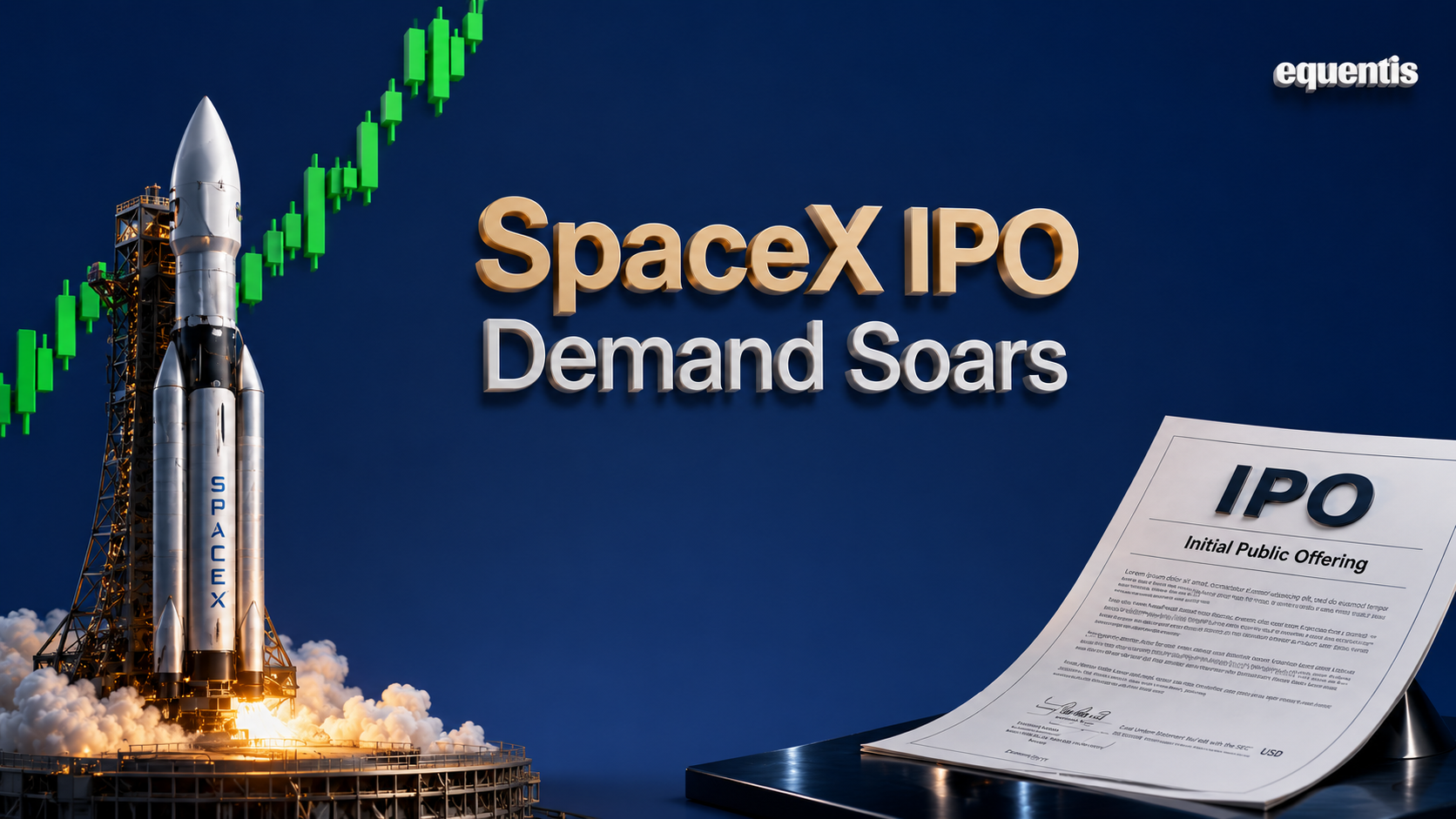
A $75 billion IPO would dwarf almost anything Wall Street has seen. SpaceX is said to be heading into its public market debut with a fixed $135 share price, and that alone tells you this deal isn’t following the usual script.
If you’re trying to make sense of the buzz, the story comes down to three things: the size of the offer, the confidence behind the pricing, and an unusually large role for retail investors. That mix could make the first days of trading look very different from a normal IPO.
The details behind that setup matter more than the headline hype.
Why SpaceX is choosing a fixed $135 IPO price
Most companies don’t walk into an IPO with a single price already pinned to the wall. They publish a range, then spend the roadshow feeling out demand. That range gives bankers room to adjust if investors push back or ask for a discount.
SpaceX is taking a different path. According to a person familiar with the matter, the company plans to market the offering at $135 per share, and that figure was expected to be made official in an amended filing after the market close. The choice was tied to a long round of “testing the waters” meetings before the roadshow, where institutional investors apparently gave enough feedback to support that level.
That matters because a fixed price changes the tone of the whole process. It suggests SpaceX and its advisers think they already know where serious demand sits. Instead of using a range to discover the market, they’re treating the roadshow more like a final confirmation.
A fixed IPO price this early suggests the company believes large investors have already shown strong demand at that level.
There is still one big unknown. Institutional buyers may have signaled support, but retail demand can behave in its own way. SpaceX is not a quiet industrial name with little public profile. It’s a company tied to rockets, satellites, launch footage, and Elon Musk’s enormous audience. That makes demand easier to spark, but harder to control.
So while the fixed price points to confidence, it doesn’t remove uncertainty. It simply shifts the question. Instead of asking where the offer should price, the market will focus on how different groups of buyers behave once trading begins.
The numbers behind the SpaceX offering
The headline figures are easier to grasp when they’re set side by side.
| Item | Reported figure |
|---|---|
| Share price | $135 |
| Shares offered | 555.6 million |
| Offering size | About $75 billion |
| Implied valuation | $1.75 trillion |
| Exchange | Nasdaq |
| Ticker | SPCX |
| Expected retail allocation | About 30% |
| Planned debut | June 12 |
At that price, SpaceX would sell 555.6 million shares, which points to an offering size of roughly $75 billion. That alone would make it historic. The implied valuation reaches $1.75 trillion, assuming the EchoStar spectrum deal and other related transactions close.
That scale is what makes the deal feel almost unreal. Alibaba still holds the title for the biggest U.S. IPO to date at $25 billion. SpaceX would come in at more than triple that size. In other words, this isn’t a large listing with some extra hype around it. It’s a record-setting offer by a very wide margin.
Reuters first reported the planned $135-per-share pricing. For a broader market snapshot, Forbes also rounded up key facts about the SpaceX IPO.
The Nasdaq debut is said to be set for June 12 under the ticker SPCX. If the terms hold, investors won’t be looking at a normal launch. They’ll be watching a public debut that would instantly sit in a class of its own.
Size, of course, doesn’t guarantee a smooth opening. A record IPO can still trade badly, trade wildly, or trade well beyond what its backers expected. But the raw numbers explain why the market is paying such close attention. There has never been a deal quite this large with this much public fascination attached to it.
Why a 30% retail allocation is such a big deal
The most unusual number in the whole setup may not be the valuation. It may be the plan to give about 30% of the IPO to retail investors.
On huge offerings with famous brands, bankers often prefer to keep retail allocations smaller. There is a simple reason for that. They usually want individual traders to show up as buyers after the stock opens, because that extra demand can help create the famous first-day “pop” that turns an IPO into a media event.
A large institutional book is easier to manage. Bankers know the major funds, speak with them directly, and can get a clearer read on whether those buyers plan to hold shares or flip them quickly. With retail, that control fades.
Bankers usually lean on institutions in big IPOs for a few reasons:
- They can gauge demand through direct conversations before pricing.
- They often have a better feel for which funds may hold shares longer.
- They can leave more room for public buyers to support trading once the stock opens.
SpaceX appears ready to stretch that old playbook. Giving retail close to a third of a deal this large is striking on its own. Doing it on the biggest IPO the market has ever seen makes it even more unusual.
The reasoning is not hard to see. Retail investors tend to be less price-sensitive when a company has a strong public identity, and Elon Musk has built that kind of following over many years. Some buyers won’t see SpaceX as a line item on a screen. They’ll see it as a chance to own part of a company they’ve watched launch rockets, build satellite networks, and dominate headlines.
Still, enthusiasm cuts both ways. The same energy that pulls buyers in can also produce fast swings if expectations run ahead of the market. A 30% retail slice gives everyday investors a bigger seat at the table. It also gives them more power to shape what happens when the stock starts trading.
The roadshow could answer the biggest open question
The institutional case for SpaceX sounds strong. The company reportedly held enough pre-roadshow meetings to convince advisers that $135 a share would clear the market. That is a strong sign of appetite, especially given the size of the deal.
Retail is the wildcard.
That doesn’t mean retail demand will be weak. In fact, the concern raised in the market conversation around this IPO is almost the opposite. Demand from individual buyers could be so intense that it creates messy price action on the first day or two, especially if people rush in with market orders and accept whatever price the market gives them.
That risk matters more in a deal with this much emotion attached to it. Brand-heavy IPOs often trade on excitement as much as spreadsheets in their opening hours. SpaceX has the scale of a mega-cap story, the attention of a celebrity company, and the kind of audience that doesn’t need a long sales pitch.
There is also a practical issue. Institutions are easier to track because there are fewer of them and because the sales teams know who they are dealing with. Retail buyers are scattered across brokerages and accounts. No one can look that crowd in the eye and ask if they’re planning to hold.
As the roadshow begins, advisers should get a clearer read on how strong that public demand looks and how price-sensitive it may be. Yet even that feedback has limits. Retail interest can shift fast once the opening bell nears.
Some people will cheer the large retail allocation because it gives ordinary investors more access than they usually get in a marquee IPO. Others will see it as a source of added volatility. Both views can be true at once. More access is fairer on paper, but it can also make day-one trading harder to predict.
Why this IPO feels different before it even starts trading
SpaceX isn’t drawing attention only because of the numbers. The company also carries a public image that few private firms can match. Its story is tied to launches, satellites, Mars ambitions, and Elon Musk’s personal brand. That gives the IPO a wider audience than most public offerings ever get.
It also helps explain why advisers may have felt comfortable skipping the usual price range. With many IPOs, the roadshow is where the market gets introduced to the company. SpaceX doesn’t need that sort of introduction. A huge share of the market already has a view on it, even if many of those people have never read a prospectus from start to finish.
That fascination isn’t just about personality. It’s also about the company’s hardware and its place in the future-tech story. If you want a better sense of why SpaceX captures so much attention, this look at how Starship propulsion works adds useful context to the engineering side of the brand.
There is another reason the IPO feels different. Most giant listings are carefully built to reduce surprises. SpaceX is heading the other way in one key respect. A fixed price and a large retail allocation invite the market to react in public, at scale, and with limited room for adjustment.
That is why this deal has pulled so much attention before the first trade. The numbers are historic, but the structure is what makes it fascinating. Wall Street has seen huge IPOs.
Final thoughts
The clearest message in the SpaceX IPO plan is confidence. A fixed $135 price suggests the company believes big investors have already done enough work to support the deal at that level.
The harder question sits with retail demand. A 30% allocation gives everyday buyers more access than usual, but it also makes the opening more difficult to map out. That tension, more than the size alone, is what makes this debut so important to watch.
A $75 billion IPO would already be history. What happens after the first trade could determine whether SpaceX becomes a clean record-breaker or one of the market’s most chaotic openings.