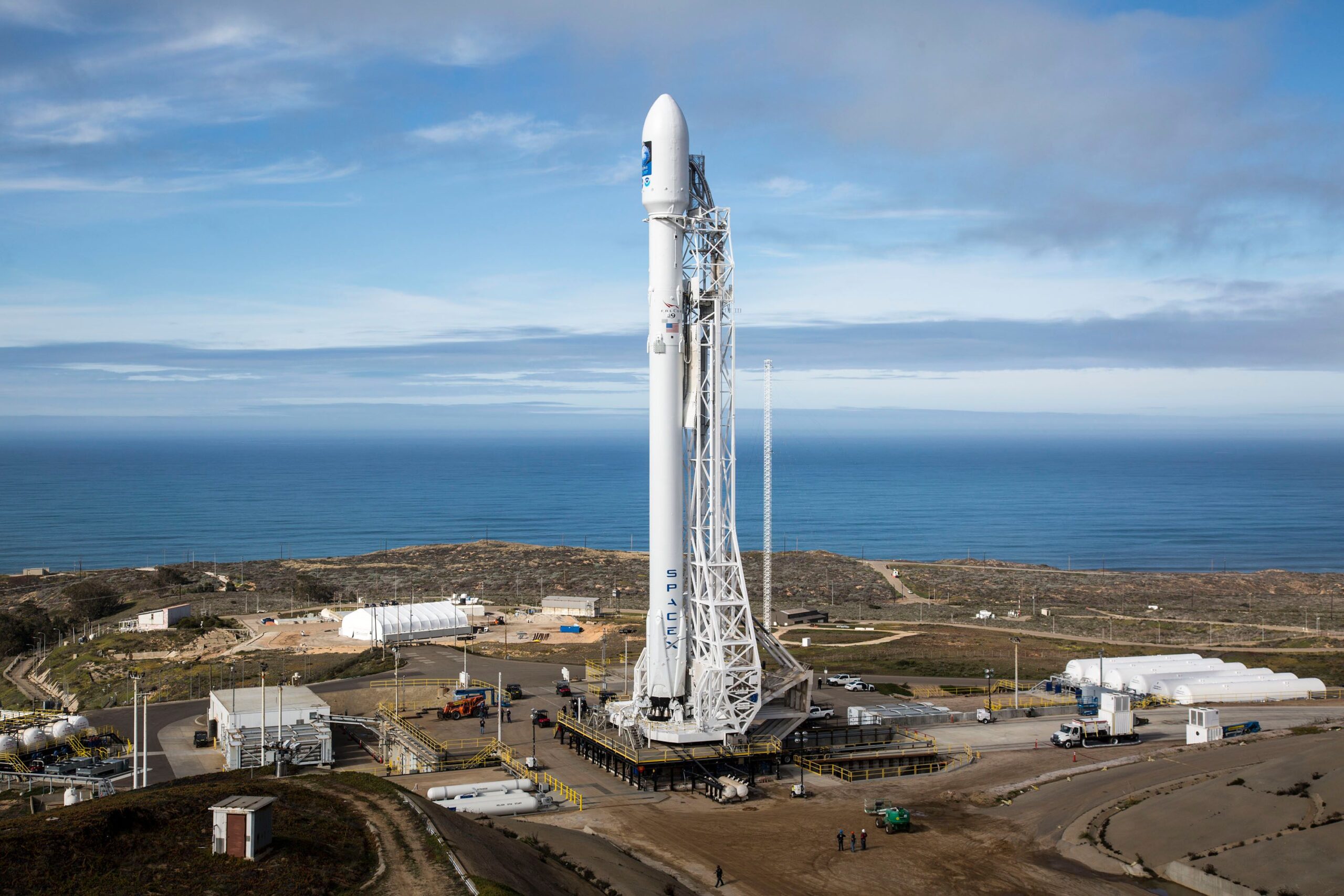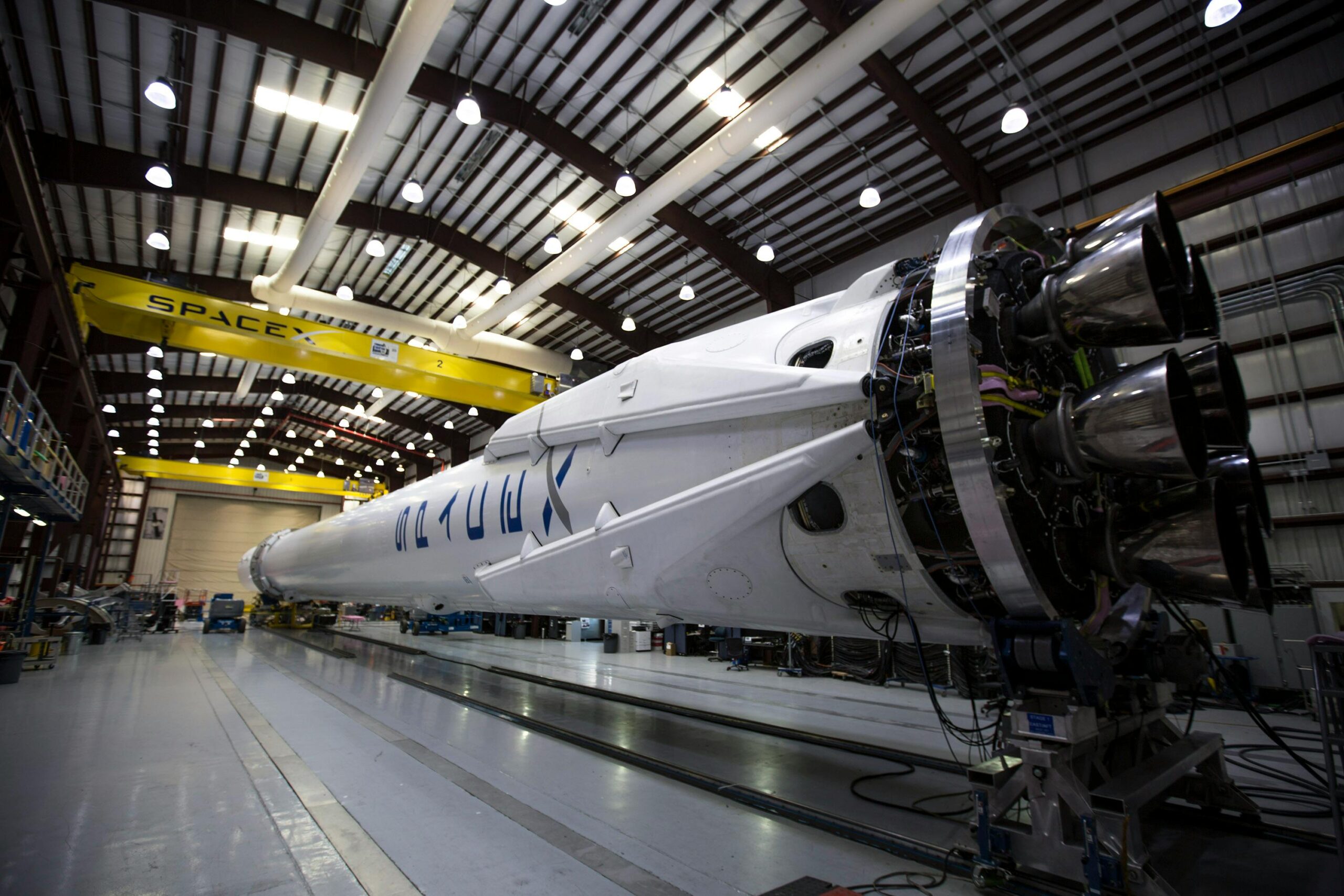
A Raptor engine lights with almost no margin for error. That tension is part of the design, because Starship needs huge power from an engine that stays compact and can fly again fast.
If you’ve ever wondered why SpaceX built something this hard to tame, start with the engine that came before it. Merlin got Falcon to orbit by staying simple. Raptor exists because Starship asks for far more.
Merlin was built for survival first
About 20 years ago, SpaceX wasn’t trying to build the most advanced launch system on Earth. It was trying to stay alive long enough to reach orbit. In the early 2000s, a private rocket startup from California sounded reckless, and investors treated it that way. Elon Musk funded the company with money from PayPal, while the clock kept ticking.
Even the names carried some personality. Falcon pointed to both Star Wars and a bird of prey. Merlin sounded like a wizard, but it’s also a small falcon. Under the fun branding, though, the engineering brief was blunt: make an engine that is simple, cheap, and good enough.
That engine was Merlin. Like most liquid rocket engines, it fed two propellants into a combustion chamber. One tank held liquid oxygen, because fire still needs oxygen in space. The other held RP-1, a refined kerosene that is dense, cheap, and easy to store compared with colder fuels.
The oxygen had to be chilled to cryogenic temperatures first. Oxygen turns liquid below about -183 C, or -297 F, and that matters because liquids pack far more mass into the same space than gases do. SpaceX also chilled its RP-1 to raise density and squeeze more energy into the tanks.
Once startup began, high-pressure pumps forced both liquids into the chamber, where they mixed and ignited. Hot gas built pressure, rushed through the engine throat, and expanded through the nozzle. That pressure drop sped up the exhaust, and the faster the exhaust left the nozzle, the harder the rocket pushed forward.
Merlin used an old, proven way to run those pumps. A small side combustion chamber, called a gas generator, burned a bit of fuel and oxygen, then blasted that exhaust through a turbine. The turbine spun a shaft that drove the main pumps. Afterward, the exhaust left through a side pipe instead of going into the main chamber. That made Merlin an open-cycle gas-generator engine, a design with roots that stretch back to the V-2 era.
It wasn’t elegant, but it worked. For a young company burning cash, that was the point.
Methane changed the job
When SpaceX turned from Falcon to Starship, Merlin stopped being enough. The new vehicle needed a different kind of engine, one with a much higher thrust-to-weight ratio and a fuel system built around rapid reuse.
That change started with the fuel. Merlin burns kerosene. Raptor burns methane.
Methane is harder to handle at first because it also has to be turned into a cryogenic liquid. So the plumbing gets more demanding before the engine even lights. Still, the trade was worth it, because methane burns much cleaner than kerosene.
Kerosene is a long-chain hydrocarbon. In a rocket engine, that makes it hard to burn every last bit into gas. Some carbon stays behind as soot. Over time, that soot sticks to hot engine surfaces and forms a buildup called coking. For a throwaway engine, that might not matter much. For a reusable engine, it does.
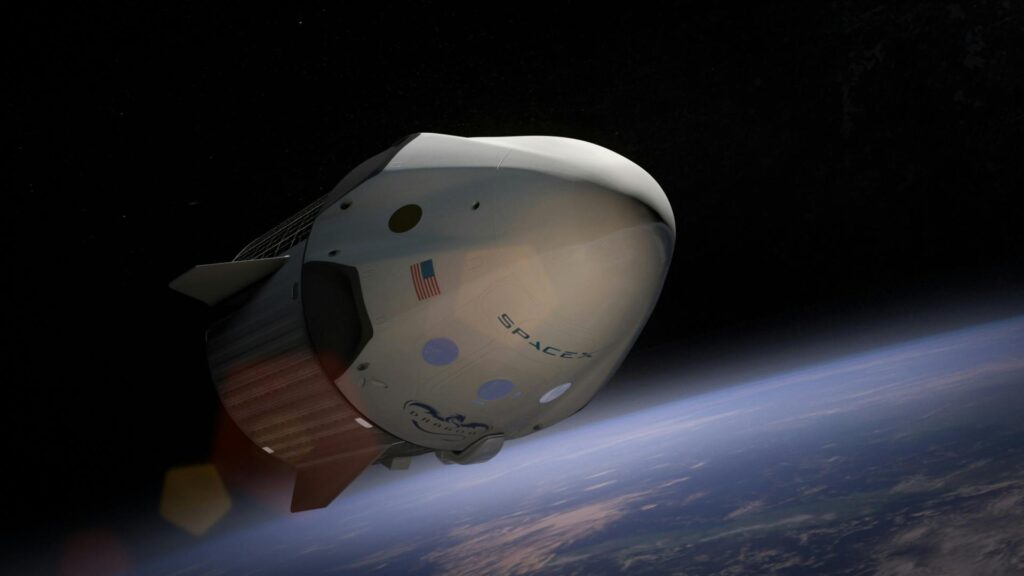
Merlin can fly again, but reuse still brings cleanup. If Starship is supposed to launch again and again, even multiple times a day, that kind of residue becomes a drag on the whole system.
Methane has a simpler carbon structure. With enough oxygen and the right conditions, it burns far more cleanly. That means less soot inside the engine, less coking, and a better shot at fast turnaround. The same basic idea shows up in everyday life. A gas stove, which burns mostly methane, doesn’t leave the kind of black residue you’d expect from a kerosene lamp.
Clean fuel alone doesn’t explain Raptor. It only makes the rest of the design possible.
Raptor keeps pressure inside the engine
Raptor is built around a full-flow staged combustion cycle, one of the hardest layouts in rocket engineering. The major versions and cycle details are summarized in Wikipedia’s Raptor overview.
Instead of one small gas generator feeding one shared shaft, Raptor splits the work. The oxygen side and the methane side each get their own preburner, turbine, and pump assembly. Those pieces are packed together into turbopumps, and both sides have to stay in sync.
On the oxygen side, liquid oxygen flows down from the tank into the pump and then into a preburner. There, it mixes with a small amount of methane and ignites. Because the methane fraction is small, the oxygen does not get fully consumed. What matters is that the liquid oxygen turns into a hot, fast-moving gas.
That gas drives the oxygen turbine, which is linked by a short shaft to the oxygen pump. So the preburner helps power the pump, and the pump feeds the preburner. Once the cycle is established, the system sustains itself at extreme pressure. After spinning the turbine, the hot oxygen-rich gas does not get thrown away. It moves onward into the main combustion chamber.
That is one of Raptor’s biggest differences from Merlin. Merlin vents gas-generator exhaust overboard. Raptor keeps that energy inside the engine.
The same logic applies to the methane side, but the path is more involved because methane also helps cool the engine before it burns. That extra plumbing adds complexity, yet it also lets SpaceX extract more work from the fuel.
This is where the name starts to make sense. “Full flow” means all of the oxygen and all of the fuel pass through preburners before reaching the main chamber. “Staged combustion” means the propellants ignite twice, first in the preburners, then again in the chamber itself.
More plumbing, more heat, and more timing demands all pile up here. In return, Raptor wastes less energy.
Cooling and startup are part of the balancing act
A rocket engine this dense with feedback loops has a basic problem: how do you start it when the pumps need power before the engine can make power?
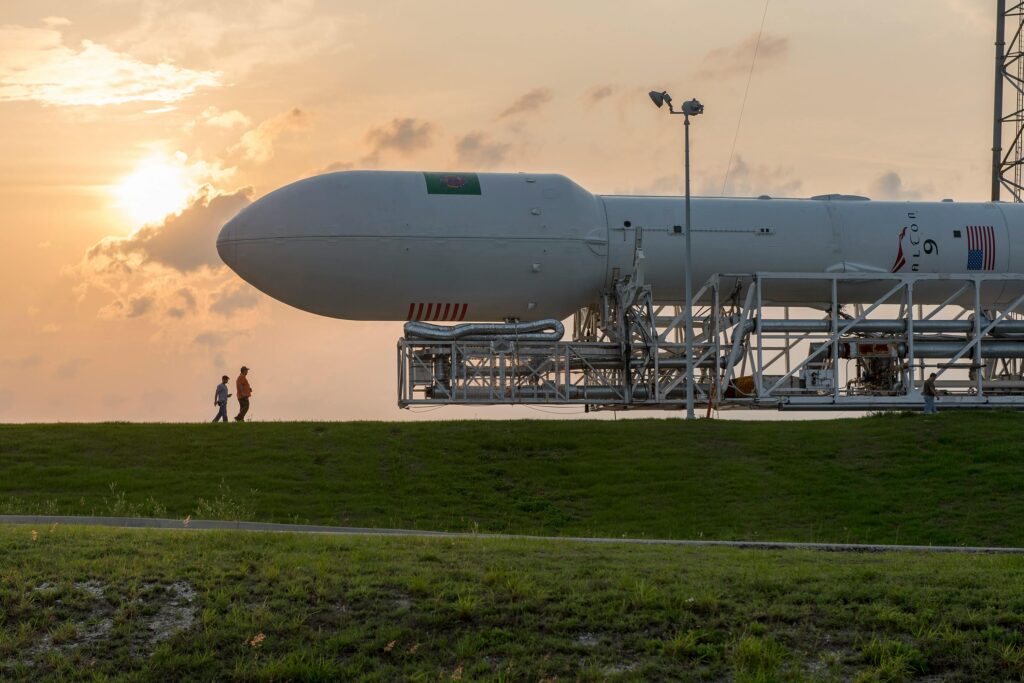
On Falcon 9, Merlin gets help from onboard helium during startup. The helium spins the turbine and gets the cycle moving. Raptor does something different. SpaceX uses hardware on the launch mount to spin-start the turbines from the outside. That is why the Starship pad is often called “Stage Zero.” The ground system is part of the ignition story.
Meanwhile, the methane side does more than feed combustion. After leaving the pump, cold liquid methane travels through passages around the nozzle and combustion chamber walls. That flow pulls heat away from the metal and keeps the engine from melting itself. Then the warmed methane heads back toward its preburner, where it meets a small amount of oxygen and ignites.
That hot methane-rich gas drives the methane turbine, which powers the fuel pump. After that, the gas moves into the main chamber, where methane and oxygen injectors bring both streams together. At that point, the engine is burning hot gas against hot gas at staggering pressure.
Raptor gets its performance by keeping preburner exhaust inside the engine. That choice boosts chamber pressure, but it also leaves very little room for a bad start or a timing error.
The combustion chamber runs at more than 300 times normal sea-level air pressure. Recent Raptor 3 testing has pushed close to 400 times ambient pressure. To prevent combustion from pushing backward through the plumbing, the turbopumps have to run even higher, around 600 times ambient pressure.
That pressure is why Raptor cannot afford an exhaust pipe like Merlin’s. The engine has to stay closed-cycle. If it vented too much energy overboard, it would give up the pressure that makes the whole design worthwhile.
Methane helps here again. Because it burns cleaner than kerosene, SpaceX can route preburner products through the rest of the engine without coating everything in soot. Try the same approach with a dirty fuel, and buildup would wreck the system fast.
All of this explains Elon Musk’s description of Raptor ignition as a delicate dance. Fuel side and oxygen side are tied together. If one outruns the other, the engine can destroy itself.
Why Raptor’s numbers stand out
Raptor is not the biggest rocket engine ever built. It is one of the most aggressive.
Raptor 3 produces about 280 metric tons of thrust at sea level, according to the figures discussed here. That is less than the Saturn V’s F-1 engine, which made more than double that thrust. Size changes the picture, though. The F-1 was enormous, the kind of engine described as large enough to fit a Jeep inside. Raptor is far smaller, about 3 meters tall and 1.5 meters wide at the nozzle.
That compact shape matters because SpaceX can pack 33 Raptors into the 9-meter-wide Super Heavy booster. The engine also compares well with the RS-25. The RS-25 produces about 190 metric tons of thrust while taking up much more space, roughly twice the size of a Raptor in the comparison given here.
A quick comparison makes the trade-offs easier to see.
| Engine | Thrust mentioned here | Size note | Key point |
|---|---|---|---|
| Merlin | Not stated here | Simpler Falcon engine | Open-cycle gas-generator design |
| Raptor 3 | 280 metric tons at sea level | About 3 m tall, 1.5 m wide at the nozzle | Full-flow staged combustion, very high chamber pressure |
| RS-25 | About 190 metric tons | About twice the size of Raptor | Lower thrust in a larger package |
| F-1 | More than double Raptor’s thrust | Huge, large enough to fit a Jeep inside | Massive power, far less compact |
What makes Raptor unusual is the amount of thrust it squeezes into that smaller frame. Chamber pressure is the core reason. Raptor 3 is running around 350 bar, or more than 5,000 psi. Merlin, by comparison, sits around 100 bar. Since the throat and nozzle turn pressure into exhaust speed, and exhaust speed into thrust, higher chamber pressure gives Raptor a huge edge.
For diagrams of the plumbing and more side-by-side context, see Everyday Astronaut’s Raptor breakdown. The short version is simple: Raptor trades simplicity for density of performance.
Mars changes the engine design
A gentler engine would be easier to build and easier to trust. It also would fall short of what Starship is trying to do.
SpaceX does not need one perfect engine for a museum piece. It needs an engine that is compact enough to cluster in large numbers, powerful enough to lift a giant reusable vehicle, and clean-burning enough to support fast reuse. Those demands pull in different directions. Raptor is the point where they meet.
That is why 33 engines firing together is not a flaw in the plan. It is the plan. Starship needs a forest of compact, high-pressure engines because brute force alone is not enough. The system has to come back, refuel, and fly again.
Merlin was the answer to a startup’s first survival test. Raptor is the answer to a harder problem, building a launch system that treats rockets less like one-time machines and more like vehicles. If Starship ever does make frequent deep-space transport practical, this engine is close to the center of that story.
Final thoughts
Raptor matters because it solves a problem Merlin never had to solve. It combines extreme chamber pressure, clean-burning methane, full-flow staged combustion, and reuse in one package.
That combination makes the engine hard to start, hard to control, and easy to lose if the timing slips. It also gives Starship the kind of thrust density a simpler engine cannot match. Every Raptor ignition sits near the edge of failure, because that edge is where SpaceX is trying to pull enough performance to make Starship work.